Ad Blocker Detected
Our website is made possible by displaying online advertisements to our visitors. Please consider supporting us by disabling your ad blocker.
We’ll approach a tent-camping power setup with focus on quiet, efficient generators and real-world loads. We’ll quantify fridge, lights, phones, and small fans, size the inverter with 20–25% headroom, and plan runtime for our campsite conditions. We’ll ensure safe ventilation, correct exhaust routing, and compliance with local noise rules. We’ll pack fuel separately, use a dedicated GFCI outlet, and follow thorough setup, maintenance, and transport steps—but a few details still matter before we commit.
Key Takeaways
- Compare battery vs gasoline: batteries offer clean power with instant startup; gas generators provide longer runtime for high-wattage devices.
- Prioritize quiet, fuel-efficient models with real-world sound profiles at 2, 4, and 6 meters for campsite use.
- Calculate essential loads (fridge, lights, charging) and add 20–25% startup headroom to choose the right inverter size.
- Consider safety, legalities, and ventilation: noise limits, exhaust routing, grounding, and permits where applicable.
- For setup and maintenance, place on level ground away from tents, check oil/fuel, and transport with fuel separated from electronics.
Choose Your Tent Camping Generator: Battery vs Gasoline
Choosing between a battery-powered and a gasoline tent camping generator hinges on reliability, runtime, and safety. We present a practical comparison to guide your decision, focusing on battery selection and fuel considerations. Battery-powered units offer clean energy with no exhaust, reduced noise, and instantaneous startup, ideal for short camps or sensitive gear. They rely on stored energy, so plan for sufficient capacity and charging access, considering inverter efficiency and peak draw. Gasoline generators provide longer runtime per fuel load and broad compatibility with high-wattage devices, yet require fuel storage, maintenance, and muffled operation in camp zones. Assess environmental sensitivity, noise ordinances, and recharge needs. For safety, store batteries and fuel separately, follow labeling and ventilation guidelines, and match generator size to equipment load.
Compare Quiet, Fuel-Efficient Generators for Campsites
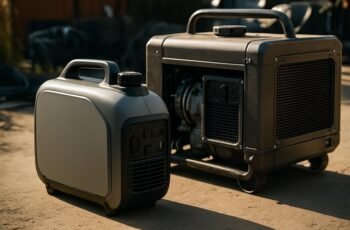
We’ll compare quiet, fuel-efficient generators for campsites by focusing on noise levels, efficiency, and practical operation. We assess sound profiles in real-world conditions, noting decibel readings at two, four, and six meters with typical encampment layouts. Quiet operation reduces nuisance and preserves wildlife, while maintaining acceptable power delivery for lighting, charging, and small appliances. We evaluate fuel efficiency under idle, light-load, and moderate-load scenarios, emphasizing runtime per tank and common fuel types. Practical operation covers startup reliability, maintenance intervals, and safe ventilation practices to prevent carbon monoxide risks. We prioritize safety—proper grounding, load balancing, and weatherproofing—and emphasize that higher efficiency doesn’t compromise steady output. Select units with robust overload protection and clear operational manuals for campsite use.
How Much Power Do You Really Need for Camping?
How much power do you actually need for camping, and how do you size it without waste? We answer with a practical approach that prioritizes quiet power and camping energy efficiency, ensuring gear runs reliably without overkill.
1) Assess essential loads: fridge, lights, phone charging, small fans.
2) Calculate combined wattage and add 20–25% headroom for startup surges.
3) Choose an inverter size that matches peak draw, not continuous rating.
4) Plan runtime targets with expected campsite conditions and season.
We emphasize compact, well-vented packaging and maintainable systems. By prioritizing load prioritization and surge margins, we prevent nuisance trips and exhaust, keeping operations safe and predictable in real-world use. This method delivers dependable performance while avoiding unnecessary fuel burn or noise.
Safety and Legal Tips for Tent Camping Generators
With our power planning in mind, we’ll shift to the safety and legal considerations that keep tent camping generators reliable and lawful. We prioritize safety compliance, fuel handling, ventilation, and proper maintenance to prevent hazards. Noise regulations and local ordinances guide our placement, operation hours, and muffling strategies, ensuring peaceful campsites. We enforce sturdy grounding, correct wiring, and clear exhaust routing to protect campers and wildlife. Documentation, permit checks, and fire-safety equipment reduce liability and accidents. Regular inspections verify cords, breakers, and overload protection. Environmental stewardship drives spill prevention and proper storage.
| Topic | Requirement | Outcome |
|---|---|---|
| Safety compliance | Ventilation, clearance | Hazard reduction |
| Noise regulations | Mufflers, timing | Quiet operation |
| Documentation | Permits, logs | Legal conformity |
Set Up and Start Up: A Simple Generator Guide at the Campsite
Before you start, place the generator on a firm, level surface away from tents, gear, and any flame sources, and verify the fuel valve, oil level, and battery connections are secure; then connect to a dedicated circuit with proper grounding and a GFCI-protected outlet to ensure safe, reliable power delivery at the campsite. We follow precise startup steps to minimize risk and maximize performance.
- Establish site safety: keep fuel tank handling compliant with local regulations and avoid fuel spills.
- Verify connections: secure wiring, ground fault protection, and stable load distribution for balanced output.
- Start sequence: choke as needed, idle briefly, and monitor RPM and voltage within specification.
- Observe etiquette: practice camping etiquette, minimize noise, and maintain clear access for emergencies.
Maintenance and Troubleshooting for Your Tent Camping Generator
Maintenance and troubleshooting for your tent camping generator is about keeping the unit reliable and safe in the field. We approach this with a systematic mindset, prioritizing prevention and rapid diagnosis. Regular generator maintenance includes oil checks, air filter inspection, spark plug condition, and coolant or fuel management as applicable to your model. Perform a cooldown before handling hot parts, disconnect the load, and use proper PPE. When troubleshooting, follow a logical sequence: verify fuel and battery status, inspect wiring for wear, and test safety switches and grounding. Maintain a concise troubleshooting checklist to ensure consistency across uses. Document findings and corrective actions after each session. Our goal is to minimize downtime and maximize safe, dependable power delivery in remote settings.
Pack, Transport, and Arrive Ready at the Campsite
How can we guarantee we pack, transport, and arrive ready at the campsite without delay or damage? We approach packing with a packing checklist that emphasizes order, protection, and accessibility, ensuring generator components survive transit and setup. Our transport considerations prioritize stability, securing fuel, and minimizing vibration to prevent damage.
- Bundle and seal fuel separate from electronics, using vetted containers.
- Secure the unit in a padded, non-slip crate or case, with straps and edge protection.
- Label all cables, adapters, and manuals for quick access at arrival.
- Inspect after transit for loose panels, leaks, or port fouling before ignition.
Following these steps, we maximize readiness, safety, and efficiency at the campsite.
Frequently Asked Questions
Can a Solar Generator Handle Heating and High-Watt Appliances?
We can’t power high-watt appliances reliably; a solar generator struggles with heating loads. Battery durability matters, and solar efficiency hinges on load management. We prioritize safety, practical setup, and precise specs for balanced capability and reliability.
How Long Does a Portable Generator Run on a Full Tank?
We run a portable generator about X hours per full tank, depending on load and fuel. We consider generator fuel efficiency and engine lifespan; we optimize for safety, efficiency, and practical use in camping scenarios.
Do Generators Require Permits or Noise Curfews at Campsites?
We comply with noise ordinances and permit exemptions; we follow campsite rules and always check local limits. We’ll use alternative power sources when needed, ensure safety, reduce emissions, and document compliance for a smooth, responsible stay.
Can I Parallel Two Generators for More Power Legally?
We can parallel generators legally, but only with identical units, transfer switch, and manufacturer guidance; we’ll guarantee multiple power sources stay synchronized, circuits protected, and emissions within limits for safe, compliant operation. Stay meticulous about safety and legal requirements.
What Maintenance Scheduling Is Required for Extended Camping Trips?
We maintain a strict schedule: inspect and clean air filters, oil, and spark plugs every 8–12 hours of operation or weekly; rotate fuels, test backups, and carry spare parts for camping gear and travel planning safety.
Conclusion
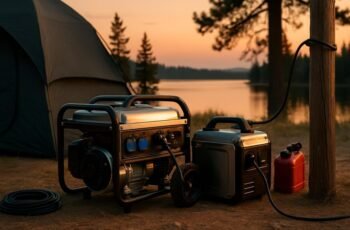
We’ll wrap this up with a clear image: a quiet, flicker-free campsite where our generator hums softly beyond the tent, exhaust tucked away, fuel stored separately, and a dedicated GFCI outlet powering phones, lights, and a tiny fan. With precise load calculations, headroom, and proper ventilation, we’ve built in safety and reliability. Follow start-up, use logs, and keep to local rules. When we arrive, we’re ready, calm, and powered, not alarmed by noise or fumes.