Ad Blocker Detected
Our website is made possible by displaying online advertisements to our visitors. Please consider supporting us by disabling your ad blocker.
We weigh small versus large generators by load, reliability goals, and total cost of ownership. We’ll balance modular resilience and lower upfront costs against scale economies and longer service intervals. If your needs are predictable and limited, a compact unit may fit; if you anticipate growth or higher duty cycles, a larger unit could pay back. The right choice hinges on a careful assessment—and the tradeoffs aren’t trivial. Let’s explore the specifics that will steer your decision.
Key Takeaways
- Small generators offer modular resilience, lower upfront costs, and easier service, ideal for scalable, short-term needs and simple deployments.
- Large generators provide economies of scale, lower per-kW operating costs, and longer service intervals for steady, high-load use.
- The best choice depends on load profile: plan with accurate sizing, essential vs nonessential circuits, and margin for future demand.
- Noiser, portability, and footprint intensify with size; midsize units often balance noise control and maneuverability.
- Total cost of ownership hinges on fuel costs, maintenance cadence, and reliability requirements, not just upfront price.
How to Decide Your Generator Size
Choosing the right generator size starts with clarity on your load. We start by listing essential loads and estimating peak and running watts, then translate them into a required kilowatt rating. We separate critical circuits from nonessential ones to determine acceptable auto-start priorities and runtime expectations. Our approach to generator sizing fundamentals focuses on accuracy, not guesswork, ensuring we don’t overspec or undersize. We also assess duty cycles, startup surges, and voltage stability to select a model with appropriate transient performance. Fuel type considerations influence efficiency, availability, and emissions, so we compare propane, natural gas, and liquid fuels for reliability and cost. Finally, we validate the result with a margin buffer to accommodate future loads, maintenance downtime, and seasonal variation, maintaining a practical, evidence-based sizing process.
Small Generators vs Large Generators: Pros and Cons
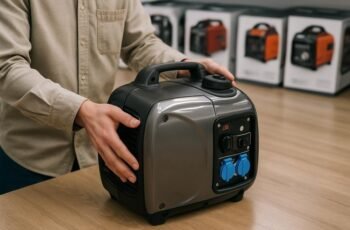
Do the size trade-offs between small and large generators really matter for reliability and cost? Yes, they shape performance, maintenance, and value. Small generators typically offer modular resilience; failures in one unit don’t derail entire power if you have parallel units. They’re faster to deploy, lighter on upfront costs, and easier to service, but may require more frequent fuel and parts replacements to sustain reliability. Large generators deliver economies of scale, lower per-kW operational costs, and longer service intervals, yet carry higher capital risk and longer lead times for repairs. For reliability, redundancy matters: multiple small generators can outperform a single large unit under certain outages, while a properly sized large generator simplifies logistics and controls. In essence, both approaches balance risk, cost, and uptime differently. small generators, large generators.
Cost, Efficiency, and Runtime by Size
Cost, efficiency, and runtime scale differently with size, and that shapes total ownership beyond upfront price. We compare smaller and larger units by how their cost efficiency and runtime differences affect lifecycle cost and reliability.
1) Lower idle losses in larger units boost cost efficiency at scale, but higher upfront capital may offset gains over short spans.
2) Runtime differences emerge from turbine and cooling efficiencies, where mid-size models often strike a balance between fuel burn and load response.
3) Maintenance, parts availability, and amortization vary with size, influencing long-term ownership beyond purchase.
Ultimately, total cost of ownership hinges on load profiles, fuel costs, and maintenance cadence. For readers, the right choice isn’t raw price—it’s how size aligns with sustained demand, stability, and predictable runtime.
Noise, Portability, and Footprint by Generator Size
Have you ever considered how noise, portability, and footprint scale with generator size? We examine how acoustic profiles, handle design, and base dimensions shift as output increases. Noise levels typically rise with larger engines and longer exhaust paths, yet enclosure and vibration isolation can dampen audible impact, yielding a nuanced noise comparison across classes. Portability trends show heavier, bulkier units challenging to move, while some midsize models balance wheels, handles, and built-in lifts more effectively. Footprint grows with power, but stacking features and compact frame layouts mitigate spatial demand in certain designs. In sum, bigger does not always mean proportionally louder or less portable; tradeoffs emerge between engine displacement, enclosure quality, and maneuverability. Our analysis emphasizes precision and measurable thresholds for practical selection. Portability tradeoffs.
Reliability, Maintenance, and Lifetime by Size
How does reliability track with size when we consider maintenance needs and expected lifetime? We examine how scale affects failure modes, service intervals, and overall uptime. Larger units often offer robust components and longer service intervals but incur higher impact when failures occur, creating distinct reliability tradeoffs. Smaller generators, by contrast, run hotter relative to capacity and may require more frequent checkups, yet easier, cheaper replacements limit downtime.
1) Maintenance schedules shift with size, balancing downtime against part wear.
2) Downtime risk grows with complexity and integration in larger systems.
3) Expected lifetime extends with quality design but increases replacement costs.
We recommend aligning maintenance windows with manufacturer guidance, monitoring load patterns, and prioritizing proactive checks to sustain reliability across sizes.
Which Size Fits Your Use Case: Weekend Cabin, Home Backup, or Workshop
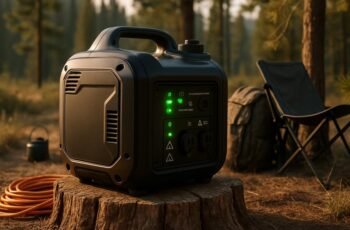
When sizing a generator for a specific use case, we move from general reliability patterns to practical distinctions that fit weekend cabins, home backup, or workshops. We focus on load profiles, duration, and startup surge to match usage. For a weekend cabin, you’ll prioritize occasional, moderate loads and fuel autonomy; choose a unit with sufficient runtime and cold-start reliability in off-grid conditions. For home backup, emphasize essential circuits, transfer compatibility, and seamless auto-start to protect critical systems. In a workshop, we weigh tools with high startup surges and continuous run demands, prioritizing robust conditioning and parallel capability if needed. Across all cases, balance wattage, efficiency, and maintenance intervals. The right size minimizes idle fuel waste while delivering reliable power for weekend cabin and home backup needs.
Quick Decision Checklist: Pick Your Generator Size
Sizing a generator is about the numbers—quickly, accurately, and without guesswork. We’ll guide you through a tight decision checklist that keeps precision front and center, so you pick the right size the first time. To keep this practical, focus on core metrics and avoid overthinking.
- Determine load profile: essential circuits, critical tools, and expected peak demand.
- Choose fuel type and runtime: balance availability, efficiency, and maintenance.
- Compare form factors: compact design versus capacity, ensuring connection compatibility and portability.
With these points, you’ll align capacity with needs, avoiding undersizing or oversizing. We emphasize a compact design for space-limited setups and clear fuel type considerations to match usage patterns. This approach minimizes waste and speeds selection without sacrificing reliability.
Frequently Asked Questions
What About Fuel Types and Availability for Different Sizes?
We consider fuel types by size, noting fuel availability varies; smaller units favor gas tariffs and portability, while larger models leverage diesel or dual-fuel options. We also assess solar compatibility and wind reliability for balanced, grid-aware deployments.
How Do Weather Conditions Affect Generator Performance by Size?
Weather conditions influence performance differently by size; we observe weather impact on efficiency, heat loss, and runtime. We present sizing considerations to mitigate degradation, ensuring appropriate buffers and ventilation. We quantify risks and adapt designs with empirical data.
Can Hybrids or Solar-Assisted Units Influence Size Choice?
Yes, hybrids influence size choices; solar assisted impact tends to reduce needed generator capacity while maintaining reliability, so you’ll often opt for smaller, integrated systems with smart interlocks and efficient load management, rather than oversized standalone units.
What Are Safety Concerns Specific to Small Versus Large Units?
We note safety concerns differ: small units pose higher risk of Electrical shocks and fuel leaks in confined spaces, while large units generate more Noise exposure; we assess ventilation, grounding, containment, and maintenance to mitigate all risks.
How Do Warranty and Downtime Compare Across Sizes?
We find that warranty coverage and downtime implications scale with size, as larger units often have longer warranty terms but higher downtime during servicing, while smaller units offer quicker field repairs and fuel availability diversity, influencing weather impact and safety considerations by scale.
Conclusion
We’ve weighed comfort against capability, costs against reliability, and scale against speed. In short, your best pick hinges on load predictability, available budget, and growth plans. Small units shine for modular resilience and rapid deployment, while large generators win on economy of scale and longer maintenance intervals. Before choosing, complete a precise load assessment and consider redundancy, runtime, noise, and footprint. So, which size best fits your future needs—can you balance risk with total cost of ownership?