Ad Blocker Detected
Our website is made possible by displaying online advertisements to our visitors. Please consider supporting us by disabling your ad blocker.
Understanding how different generators compare in fuel efficiency can help you make smarter choices for your power needs and budget. With so many types and factors at play, it’s essential to know what influences performance and costs over time. Whether you’re considering a backup unit for emergencies or a portable option for outdoor use, knowing the key differences can save you money and hassle—yet, there’s more to uncover to truly optimize your setup.
What Are the Main Types of Generators and How Do They Differ in Fuel Efficiency?
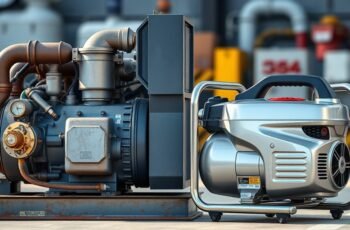
Have you ever wondered how different types of generators compare when it comes to fuel efficiency? There are mainly three types: portable, standby, and inverter generators.
Portable generators tend to be less fuel-efficient because they’re designed for short-term use and often run at higher speeds.
Standby generators, installed permanently, usually have better fuel efficiency since they operate continuously and are optimized for longer runs.
Inverter generators are known for their efficiency at variable loads; they adjust engine speed based on power demand, saving fuel.
Each type differs in design and intended use, which impacts fuel consumption. Your choice depends on how much power you need and how long you’ll run the generator, directly influencing fuel efficiency.
Key Factors That Affect Generator Fuel Consumption
Several key factors influence how much fuel a generator consumes during operation. First, the load size plays a significant role; running a generator below or above its optimal capacity can lead to inefficient fuel use.
Second, the generator’s age and maintenance impact fuel efficiency; poorly maintained units burn more fuel due to clogged filters or worn parts.
Third, the quality of the fuel itself matters—clean, high-quality fuel burns more efficiently.
Additionally, environmental conditions like temperature and altitude affect performance, with extreme conditions increasing fuel consumption.
Finally, the generator’s design and technology, such as newer models with advanced engines, tend to operate more efficiently.
Understanding these factors helps you optimize fuel use and extend your generator’s runtime.
How to Calculate Your Generator’s Fuel Efficiency
To accurately assess your generator’s fuel efficiency, start by tracking how much fuel it consumes over a specific period of operation. Record the amount of fuel used in gallons or liters during a set time, like an hour or a day.
Note the total runtime to understand how long the generator runs during that period. Next, divide the amount of fuel used by the hours of operation to find the fuel consumption rate per hour.
To determine efficiency, compare this to the generator’s output, such as kilowatt-hours (kWh) generated. This calculation will give you a clear picture of how much fuel your generator consumes for each unit of energy produced.
Consistently tracking this data helps identify efficiency trends and detect potential issues.
Fuel Efficiency of Gasoline, Diesel, and Propane Generators
When comparing fuel efficiency among gasoline, diesel, and propane generators, it’s important to recognize that each fuel type offers distinct advantages and drawbacks.
Gasoline generators are generally less efficient but are more affordable upfront and easier to find. They tend to consume more fuel over time, especially at high loads, making them suitable for short-term or emergency use.
Diesel generators are more fuel-efficient and provide longer runtimes, especially under heavy loads. However, they tend to be more expensive and require more maintenance.
Propane generators are often the most efficient in terms of fuel consumption per hour, particularly for intermittent use, and produce cleaner emissions. However, propane may be less available in some areas, and storage can be more complex.
Your choice depends on your specific power needs and fuel availability.
How Much Do Generators Cost to Operate Over Time?
Ever wondered how the long-term costs of running a generator add up? Operating expenses include fuel, maintenance, and potential repairs, which vary based on generator size and fuel type.
Fuel costs are the biggest ongoing expense, and prices fluctuate regularly, impacting your overall budget.
Maintenance costs depend on usage frequency and how well you care for the unit.
Diesel generators tend to be more expensive to maintain but often have longer lifespans.
Gasoline models might cost less upfront but require more frequent repairs.
Propane generators usually have lower operating costs and cleaner fuel, but initial prices can be higher.
To accurately estimate total costs over time, consider your expected usage, fuel prices in your area, and maintenance needs.
This way, you can choose the most cost-effective option.
Environmental Impact of Gasoline, Diesel, and Propane Generators
Have you ever considered how your choice of generator fuel impacts the environment? Gasoline generators emit more carbon monoxide and volatile organic compounds compared to propane, contributing to air pollution.
Diesel generators produce higher levels of nitrogen oxides and particulate matter, which can harm air quality and health.
Propane generators burn cleaner, releasing fewer greenhouse gases and pollutants. However, propane is still a fossil fuel and contributes to emissions, albeit at a lower rate.
Your fuel choice affects not only air quality but also greenhouse gas levels, impacting climate change.
By selecting cleaner-burning options like propane, you reduce your environmental footprint.
Being aware of these impacts helps you make more environmentally conscious decisions when choosing a generator.
Tips to Improve Your Generator’s Fuel Efficiency When Using It
To maximize your generator’s fuel efficiency, start by maintaining it regularly, including oil changes, air filter replacements, and spark plug inspections. A well-maintained engine runs more smoothly and consumes less fuel.
Avoid overloading the generator; only power essential appliances to prevent unnecessary strain.
Operate it in a cool, shaded area to prevent overheating, which can reduce efficiency.
Use the right type of fuel recommended by the manufacturer, as mismatched fuel can cause inefficient combustion.
Keep the control panel clean and ensure the fuel tank isn’t overfilled or underfilled.
Running the generator at a consistent, moderate load helps conserve fuel better than fluctuating demands.
Regularly checking for leaks or blockages also prevents waste and ensures optimal performance.
Best Fuel-Efficient Generators to Consider in 2023
In 2023, choosing the most fuel-efficient generator can significantly cut your energy costs and reduce emissions. Top options include inverter generators like the Honda EU2200i, known for its excellent fuel economy and quiet operation.
The Yamaha EF2000iSv2 also offers impressive efficiency with reliable performance for small to medium loads.
If you need more power, consider the Champion 3400-Watt inverter, which balances high fuel efficiency with versatility.
For larger demands, the Generac iQ3500 stands out with its optimized fuel consumption and portability.
These models incorporate advanced engine technology to maximize runtime per tank, helping you save money and lessen your environmental impact.
When selecting, prioritize features like inverter technology and load capacity to ensure you get the most efficiency for your needs.
How to Choose the Right Generator for Power, Budget, and Environment
Choosing the right generator depends on balancing your power needs, budget, and environmental considerations.
First, assess your power requirements by calculating the total wattage of devices you’ll run simultaneously. If you need backup power for essentials, a smaller, portable generator may suffice.
For larger homes or businesses, consider a standby generator with higher capacity.
Next, set a realistic budget, factoring in both initial costs and fuel expenses. Look for models with good fuel efficiency to save money long-term.
Lastly, think about the environment—opt for generators that produce fewer emissions or run on cleaner fuels like propane.
Research fuel types, noise levels, and eco-friendly features.
Conclusion
Choosing the right generator depends on your power needs, budget, and environmental concerns. By understanding fuel efficiency differences and following best practices, you can maximize runtime and minimize costs. Regular maintenance and proper load management are key. Whether you opt for gasoline, diesel, or propane, staying informed helps you make smarter choices, ensuring reliable power while saving fuel and reducing your environmental impact. Stay proactive, and your generator will serve you well for years to come.