Ad Blocker Detected
Our website is made possible by displaying online advertisements to our visitors. Please consider supporting us by disabling your ad blocker.
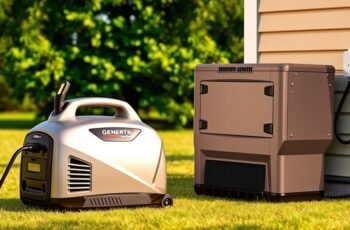
We seek to understand how inverter and conventional generators differ in performance, noise levels, portability, and value. Both serve specific needs, yet their core distinctions impact usability, efficiency, and maintenance. Recognizing these differences is essential for making an informed choice. As we analyze their technical characteristics, consider which features align best with your application and why these variations matter for your power needs.
Key Takeaways
- Inverter generators produce stable, clean power suitable for sensitive electronics, while conventional generators may cause power fluctuations.
- Inverter models are quieter, more portable, and energy-efficient, compared to larger, noisier conventional units.
- Conventional generators are typically larger, heavier, and better for high-power, heavy-duty applications.
- Inverter generators are more expensive upfront but offer better fuel efficiency and longer-term savings.
- Conventional generators are simpler to maintain with fewer electronic components, making repairs easier.
How Do Inverter and Conventional Generators Differ in Performance?
Inverter and conventional generators differ markedly in their performance, primarily due to their power output regulation and waveform quality. Inverter generators utilize advanced electronic components to produce a stable, sine wave AC power, which enhances efficiency and reduces stress on connected devices. They often run on gasoline but are designed for fuel efficiency, using less fuel with smart load management. Conventional generators, on the other hand, produce a fluctuating waveform that can cause power surges, affecting sensitive electronics. Their design generally results in higher noise levels, but some models incorporate noise reduction features. The inverter’s ability to modulate engine speed according to load improves fuel consumption and minimizes noise, making it suitable for delicate electronics and quieter operation. These performance differences directly impact usability and application suitability.
Which Generator Types Are Quieter and Why Does Noise Matter?
Inverter generators operate at lower noise levels compared to conventional models due to their advanced engine management and sound-dampening features. Noise levels directly impact user comfort and suitability for various environments, especially in noise-sensitive settings. Understanding sound power and its influence on usage helps determine the most appropriate generator type for specific needs.
Inverter Generators Run Quieter
Because noise levels can substantially impact usability, inverter generators operate more quietly than conventional models due to their advanced power regulation technology. They utilize a variable-speed inverter motor that adjusts engine RPM based on load demand, reducing mechanical noise and vibration. This dynamic regulation minimizes noise pollution, making them suitable for environments requiring sound insulation, such as campsites or residential areas. The precise control over engine speed results in a consistent, smoother operation, decreasing abrupt sound spikes common in traditional generators. Additionally, the design of inverter generators emphasizes sound-dampening features, further reducing noise output. These technological and structural advantages collectively enable inverter generators to run markedly quieter, enhancing their suitability for noise-sensitive applications while maintaining reliable power output.
Noise Levels Affect Comfort
Noise levels markedly influence user comfort and the suitability of a generator for specific environments. Lower noise emissions enhance environmental integration and reduce disturbance. Inverter generators typically feature superior sound insulation and vibration reduction technologies, resulting in quieter operation compared to conventional models. These design elements minimize sound transmission and dampen vibrations, directly impacting perceived noise levels.
| Generator Type | Sound Insulation | Vibration Reduction |
|---|---|---|
| Inverter | Enhanced insulation layers | Engine mounts and dampers |
| Conventional | Basic casing design | Standard mounting |
| Both | Varies by model | Varies by design |
This table highlights the technical differences contributing to noise reduction, emphasizing why inverter generators generally offer a more comfortable experience.
Sound Power Influences Usage
The level of sound power emitted by a generator considerably influences its suitability for various applications, with quieter models preferred in environments demanding minimal disruption. Inverter generators typically produce lower sound power levels due to advanced sound insulation and optimized engine design, making them suitable for noise-sensitive settings such as residential areas and outdoor events. Conventional generators, in contrast, often generate higher noise pollution because of their larger engines and less effective sound insulation. Noise pollution impacts both comfort and safety, so selecting a generator with reduced sound power can mitigate these effects. By considering sound insulation properties and sound power ratings, users can better match generator types to specific usage environments, ensuring operational efficiency while minimizing environmental noise pollution.
How Portable Are Inverter vs. Conventional Generators for Different Uses?
In evaluating portability, we consider weight and size, which directly impact ease of transport and setup. Inverter generators tend to be lighter and more compact, making them suitable for frequent movement and storage. Conversely, conventional generators are typically larger and heavier, limiting their mobility for dynamic applications.
Weight and Portability
While both inverter and conventional generators vary in weight, inverter models are generally designed to be more portable due to their lightweight construction and compact form factor. The weight comparison reveals that inverter generators typically weigh between 20 to 60 pounds, making them easier to transport and handle. Conversely, conventional generators often exceed 100 pounds, requiring additional equipment like wheels or lifts for mobility. Portability factors such as size, weight distribution, and ease of carrying influence their suitability for different uses, including camping, outdoor events, or backup power. The reduced weight and streamlined design of inverter generators enhance their portability, allowing for quick setup and transport. This makes them ideal for situations demanding frequent movement or space-efficient storage.
Size and Storage Ease
Since size directly impacts storage and transport convenience, inverter generators generally offer more compact dimensions compared to conventional models. Their smaller footprint facilitates easier handling and storage, especially in constrained spaces. This compact design enhances portability for various applications, including providing battery backup during outages or integrating renewable sources with minimal spatial requirements.
Key considerations include:
- Efficient storage for limited spaces, such as closets or vehicle trunks
- Enhanced portability suited for frequent relocation or outdoor use
- Simplified integration with renewable energy systems due to reduced size and weight
Mobility for Various Uses
The compact size of inverter generators directly enhances their mobility across various applications, making them more suitable for diverse environments. Their lightweight design allows for easier transport and setup in remote locations, outdoor events, or camping sites. Battery compatibility further improves mobility, enabling seamless integration with portable power banks or rechargeable batteries, reducing reliance on fuel sources. Many inverter models feature remote control capabilities, allowing users to start or stop the generator from a distance, which adds convenience in tight spaces or hard-to-reach areas. Compared to conventional generators, which tend to be bulkier and heavier, inverters offer superior portability without sacrificing power quality. This combination of size, remote control access, and battery compatibility makes inverter generators highly adaptable for various uses, from emergency backup to recreational activities.
What Are the Cost Differences and Which Offers Better Value?
When comparing the costs of inverters and conventional generators, initial purchase price is a primary factor, but ongoing operational expenses substantially influence overall value. Inverter generators generally have higher upfront costs due to advanced technology and refined manufacturing, but their efficiency can reduce long-term expenses. Pricing models vary, with some offering flexible payment plans or package deals that impact total cost. Warranty coverage also influences value, with inverter models often featuring longer or more extensive warranties, which can offset initial costs.
- Upfront costs influenced by advanced technology and manufacturing processes
- Long-term savings through improved fuel efficiency and lower maintenance needs
- Warranty coverage differences impacting total ownership costs
How Do Fuel Efficiency and Runtime Vary Between the Two?
Inverter generators typically demonstrate superior fuel efficiency compared to conventional models, primarily due to advanced inverter technology that adjusts engine speed based on power demand. This dynamic control reduces unnecessary fuel consumption, optimizing runtime efficiency. Conventional generators often run at full throttle regardless of load, resulting in higher fuel use and shorter operational periods per tank. In contrast, inverter models modulate engine speed, conserving fuel during low-demand operations and extending runtime. As a result, inverter generators generally achieve longer operational periods on less fuel, making them more cost-effective over time. This difference in fuel consumption directly impacts runtime efficiency, with inverter units providing more consistent and prolonged power supply, especially under fluctuating loads.
Which Generator Is Easier to Maintain and Service?
Because of their simpler design, conventional generators are generally easier to maintain and service than inverter models. Their straightforward construction results in lower maintenance complexity and reduced service frequency. These generators typically feature fewer electronic components, simplifying diagnostics and repairs.
Key factors include:
- Simplified engine components reduce the need for frequent servicing.
- Fewer electronic parts lower the risk of failure and ease troubleshooting.
- Accessible design facilitates routine inspections and part replacements.
Which Type Is Better Suited for Emergency Power or Camping?
Are inverter generators better suited for emergency power or camping scenarios? Yes, they excel due to their ability to deliver stable, clean energy essential for sensitive devices. Their advanced inverter technology enables precise frequency and voltage regulation, making them ideal for emergency situations requiring reliable power backup. Additionally, inverter generators often incorporate energy storage options, such as batteries, to provide instant power during outages. This feature also supports renewable integration, allowing for hybrid systems that enhance sustainability during camping trips. Their compact, lightweight design increases portability, making them suitable for remote locations. Overall, inverter generators offer more consistent, efficient power for emergency preparedness and camping, especially when considering renewable energy options and energy storage capabilities that guarantee a continuous power supply in critical situations.
How Should You Choose Between Inverter and Conventional Generators Based on Your Needs?
When selecting a power generator, understanding your specific energy needs and operational conditions is vital. To choose effectively between inverter and conventional generators, consider factors like desired power output, installation requirements, and noise levels. If you need a lightweight, portable solution with clean power for sensitive electronics, an inverter generator is ideal. Conversely, for higher power output and robust operation in demanding environments, a conventional generator may be better suited. Key considerations include:
- Power output: match generator capacity to your load requirements.
- Installation requirements: assess space, ventilation, and fuel accessibility.
- Operational conditions: evaluate noise restrictions and portability needs.
This precise evaluation guarantees the selected generator aligns with your technical demands and operational constraints.
Frequently Asked Questions
Are Inverter Generators More Environmentally Friendly Than Conventional Models?
We believe inverter generators are more environmentally friendly due to their superior fuel efficiency and noise reduction. These features minimize emissions and pollution, making them a sustainable choice for eco-conscious users seeking cleaner operation and lower environmental impact.
Can Inverter Generators Handle Larger Power Loads Effectively?
Inverter generators can handle larger power loads effectively due to their superior power capacity and advanced load management, allowing precise control and stable output, making them suitable for high-demand applications without sacrificing efficiency or performance.
What Safety Features Differentiate Inverter From Conventional Generators?
We find inverter generators equipped with safety features like overload protection and automatic shutoff, enhancing fuel efficiency and reducing noise levels, making them safer and more reliable than conventional models for sensitive electronics and quiet environments.
How Do Inverter Generators Perform in Extreme Weather Conditions?
Inverter generators demonstrate strong extreme weather resilience and cold climate performance due to their advanced cooling systems and insulated components, ensuring reliable operation in harsh conditions. They adapt better to temperature fluctuations than conventional models.
Are There Any Compatibility Issues With Inverter Generators and Sensitive Electronics?
We find inverter generators highly compatible with sensitive electronics, thanks to their clean power output with minimal power surges. They also operate quietly, typically producing noise levels around 50-60 dB, ensuring safe, stable operation for delicate devices.
Conclusion
Ultimately, selecting between inverter and conventional generators hinges on your specific requirements. While inverter units excel in delivering stable, quiet, and portable power ideal for sensitive electronics and outdoor activities, conventional models offer unmatched durability for heavy-duty, stationary needs. By carefully weighing factors like performance, noise, portability, and cost, you can make a well-informed choice that aligns with your operational demands, ensuring reliable power solutions tailored to your unique circumstances.