Ad Blocker Detected
Our website is made possible by displaying online advertisements to our visitors. Please consider supporting us by disabling your ad blocker.
When choosing between portable power stations and traditional generators, you need to consider your specific needs and environment. Each option offers distinct advantages and drawbacks that could significantly impact your experience, whether for camping, work sites, or emergency backup. Understanding how these systems work and what they cost can help you make an informed decision—one that balances convenience, power capacity, and environmental impact. Let’s explore these options more closely.
What Are Portable Power Stations and How Do They Work?
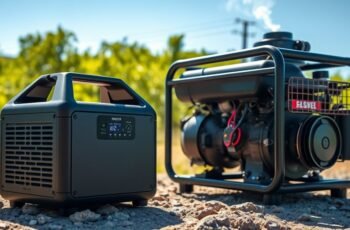
Portable power stations are compact, battery-powered devices designed to provide electricity on the go, whether you’re camping, during a power outage, or working remotely. They store energy in high-capacity batteries and deliver it through various outlets.
You simply charge the station beforehand using a wall outlet, solar panel, or car charger. Once charged, you can power small appliances, phones, laptops, or even some medical devices.
These stations often feature USB ports, AC outlets, and DC outlets, giving you versatility for different devices.
They operate quietly, without fumes or emissions, making them ideal for indoor and outdoor use.
Because they run on stored electricity, you don’t need fuel, and they’re generally easy to transport and set up wherever you need power.
Pros and Cons of Portable Power Stations
Are portable power stations a practical solution for your energy needs? They offer several advantages, like quiet operation, no fuel emissions, and easy portability, making them perfect for camping or emergency backups.
You can charge them using solar panels or wall outlets, adding convenience. However, they also have limitations. Their capacity is generally lower than traditional generators, so they mightn’t power high-demand appliances for long.
They can be expensive upfront, and their batteries may degrade over time, reducing capacity. Additionally, their runtime depends on the device’s power consumption, which could be inconvenient in extended outages.
What Are Traditional Generators?
Traditional generators are robust, fuel-powered machines designed to produce large amounts of electricity for extended periods. They typically run on gasoline, diesel, or propane, making them suitable for backup power during outages or for outdoor activities like camping or construction work.
These generators operate with an engine that drives an alternator, converting mechanical energy into electrical energy. They often feature wheels and handles, allowing for portability despite their size and weight.
While they can generate high wattages and support heavy-duty appliances, they tend to be noisy, emit fumes, and require regular fueling and maintenance.
Unlike portable power stations, traditional generators are less eco-friendly and need proper ventilation due to exhaust gases. They’re reliable for long-term power needs but demand careful handling and safety precautions.
Advantages and Limitations of Generators
Generators offer reliable power solutions, especially when you need a dependable source for extended use or in remote locations. They can produce substantial electricity, making them ideal for powering appliances, tools, or entire sites.
Their portability allows you to bring power where grid access isn’t available. However, generators have limitations. They tend to be noisy, which can be disruptive, especially in quiet environments. They also emit fumes, so you need proper ventilation during operation.
Maintenance is necessary to keep them running efficiently, and fuel costs can add up over time. Additionally, their size and weight make them less convenient to transport frequently.
While they’re powerful and dependable, these limitations mean you should weigh their benefits against potential drawbacks depending on your specific needs.
Cost, Environmental Impact, and Maintenance Comparison
When comparing portable power stations to traditional generators, cost plays a significant role in your decision. Portable power stations typically have a higher upfront price but require minimal ongoing expenses, as they’ve no fuel costs or complex maintenance.
Traditional generators often cost less initially but can rack up fuel and maintenance expenses over time.
Environmentally, portable power stations produce no emissions, making them cleaner and more eco-friendly. Gas-powered generators emit carbon and other pollutants, impacting air quality.
Maintenance for portable stations is straightforward—mainly occasional battery care—whereas generators need regular oil changes, spark plug replacements, and fuel system checks.
Which Power Source Is Right for Your Needs?
Choosing the right power source depends on your specific needs, priorities, and usage scenarios.
If you need reliable, high-capacity power for extended outages or large equipment, a traditional generator might be your best choice. They’re often more powerful but require fuel, regular maintenance, and noise considerations.
On the other hand, if portability, ease of use, and quiet operation matter most, a portable power station could be ideal. They’re perfect for camping, small-scale emergencies, or charging essential devices without emissions or noise.
Consider how often you’ll need power, your environmental concerns, and your budget. Both options serve different purposes, so evaluating your primary needs will help you determine which suits you best—whether it’s the raw power of a generator or the convenience of a portable station.
Tips for Safe and Efficient Use of Power Stations and Generators
To ensure safe and efficient operation, it’s essential to follow proper guidelines whenever using power stations or generators. Always read the manufacturer’s instructions before use, and keep the units in well-ventilated areas to prevent dangerous fumes.
Avoid overloading the device; check the maximum wattage capacity and don’t exceed it. Regularly inspect cords and connections for damage, replacing any worn or frayed cables.
When charging or refueling, do so in a dry environment and away from open flames or heat sources. Use appropriate extension cords designed for outdoor or heavy-duty use.
Keep children and pets away from the equipment. Lastly, store your power station or generator in a cool, dry place when not in use to prolong its lifespan and ensure safety.
Conclusion
Choosing between portable power stations and traditional generators depends on your needs. If you want quiet, eco-friendly, and easy-to-transport power for camping or emergencies, a power station’s your best bet. But if you require high capacity and extended runtime, a generator might be better. Consider your power demands, budget, and environment. Whichever you choose, prioritize safe and proper use to get the most out of your energy source.