Ad Blocker Detected
Our website is made possible by displaying online advertisements to our visitors. Please consider supporting us by disabling your ad blocker.
When choosing between a home standby and a portable generator, you need to consider your power needs, budget, and how you plan to use the device. Both options have distinct advantages and limitations that can impact your daily life, especially during outages or outdoor activities. Understanding the key differences can help you make an informed decision, but it’s also important to explore how each fits into your specific situation before making a commitment.
What Are Home Standby and Portable Generators?
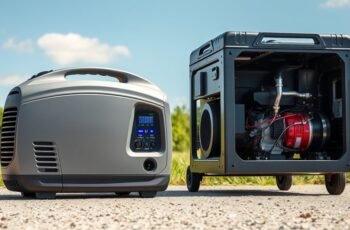
Home standby and portable generators are essential backup power sources that serve different needs. A home standby generator is a large, permanently installed unit that automatically kicks in during a power outage, providing continuous electricity to your home. It’s connected directly to your home’s electrical system and fueled by propane or natural gas.
Portable generators, on the other hand, are smaller, movable units that run on gasoline. You can carry them easily and use them anywhere you need temporary power, like camping sites or outdoor events.
While standby generators are designed to keep your entire house running during outages, portable models are best for powering specific appliances or tools. Both types offer reliable backup power, but they differ significantly in size, installation, and use cases.
How to Choose the Right Generator for Your Needs
Choosing the right generator depends on assessing your specific power needs and usage scenarios. First, determine what appliances or tools you’ll run during a power outage or on-the-go. Make a list of essential devices and note their wattage requirements.
Consider how long you’ll need power — short-term backup or prolonged use. If you need to power large appliances like refrigerators or HVAC systems, a higher-capacity generator is essential.
For light, occasional use, a smaller portable unit may suffice. Think about mobility: do you need to move the generator frequently? If so, weight and portability are key factors.
Also, consider your budget and future needs. Matching your power demands with a generator’s capacity ensures reliable performance without overspending or underpowering.
Key Features of Home Standby Generators
When considering a home standby generator, several key features ensure reliable and efficient backup power. First, automatic transfer switches activate the generator immediately when the power goes out, so you don’t have to manually start it.
These generators are permanently installed outside your home, designed to start automatically and restore power quickly. They typically run on propane or natural gas, providing continuous fuel supply without needing refueling during outages.
Many models come with sound attenuation features, reducing noise levels. Additionally, modern standby generators often include smart technology for remote monitoring, allowing you to check their status from anywhere.
Their durable construction ensures they withstand harsh weather conditions, providing peace of mind during storms or extended outages.
Why Portable Generators Are Perfect for Outdoors and Emergencies
Portable generators are ideal for outdoor activities and emergencies because they can be easily moved to different locations whenever you need power. Whether you’re camping, tailgating, or facing a power outage, their lightweight design lets you transport them effortlessly.
You won’t need to install complex wiring or rely on fixed electricity sources. Instead, you can set them up quickly wherever power is needed, providing a reliable energy source in remote or unexpected situations.
These generators are versatile, running on gasoline or propane, making them convenient for outdoor use. Their compact size means you can store them easily in your vehicle or shed.
Cost, Installation, and Maintenance Considerations
Although both home standby and portable generators require an upfront investment, their costs can vary significantly based on features and capacity. Home standby units are typically more expensive initially, often costing several thousand dollars, including installation. You’ll need professional setup, which adds to the expense, but it ensures safe, reliable operation.
Portable generators are generally more affordable upfront and don’t require installation—just plug and go, though they still need regular maintenance. Maintenance for standby models involves periodic professional inspections, while portable units require more hands-on upkeep, like oil changes and part checks.
Consider ongoing costs, such as fuel and replacement parts, to determine the true long-term expense. Balancing initial costs with ongoing maintenance helps you choose the right generator for your needs.
Pros and Cons of Home Standby Generators
Home standby generators offer reliable power during outages, making them a popular choice for homeowners who want peace of mind. They automatically turn on when the power goes out, ensuring your home stays functional without manual effort.
One major advantage is their ability to power entire homes, including appliances, heating systems, and electronics. However, they come with higher upfront costs and installation requirements, often needing a dedicated space and professional setup.
Maintenance is essential but manageable, involving periodic testing and servicing.
The size and noise level can be concerns; larger units produce more noise and may not suit all living situations.
Pros and Cons of Portable Generators
A key advantage of portable generators is their flexibility; you can move them easily to different locations as needed. This makes them perfect for outdoor activities, camping, or powering equipment during emergencies.
They typically cost less upfront and are easier to install than standby models. However, they require manual setup before each use, and you must refuel them regularly, which can be inconvenient. Noise levels tend to be higher, and their power output is limited compared to standby generators.
Additionally, safety concerns like carbon monoxide buildup mean you must operate them outdoors and away from windows or vents. While portable generators offer versatility and affordability, they demand more attention and maintenance, making them less suitable for continuous, whole-home backup.
Conclusion
Choosing between a home standby and a portable generator depends on your needs. If you want reliable, automatic backup power for long-term outages, a standby unit is ideal. But if you need flexibility for outdoor activities or short-term emergencies, a portable generator works best. Consider your budget, installation space, and how often you’ll use it. Whichever you pick, understanding their features helps you make the right choice for peace of mind and convenience.