Ad Blocker Detected
Our website is made possible by displaying online advertisements to our visitors. Please consider supporting us by disabling your ad blocker.
When choosing a power source, you need to consider more than just price. Quiet power stations and noisy generators each have unique strengths and drawbacks that can impact your outdoor activities, home use, or emergency plans. Understanding how they operate and what makes one option better suited for your needs can make all the difference. Keep in mind that the right choice might depend on factors you haven’t yet considered.
How Do Quiet Power Stations and Noisy Generators Work?
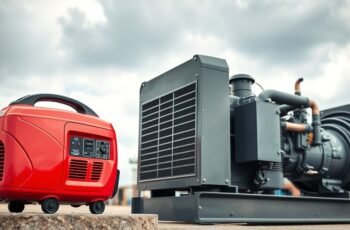
Quiet power stations and noisy generators operate differently to produce electricity. Quiet power stations typically use advanced inverter technology, converting DC power into AC efficiently and silently. They store energy in batteries or fuel cells, releasing it when needed, with minimal noise. These systems often incorporate smart controls to optimize performance quietly.
In contrast, noisy generators rely on internal combustion engines that burn fuel to turn a rotor, creating electricity. The combustion process produces vibrations and exhaust, resulting in loud operation. The engine’s mechanical parts generate significant noise and require cooling systems that add to the sound.
Advantages of Quiet Power Stations for Your Needs
One of the biggest advantages of quiet power stations is that they provide reliable energy without disturbing your environment or daily activities. You can use them indoors or outdoors without worrying about loud noises disrupting work, sleep, or conversations.
Their silent operation makes them ideal for camping trips, outdoor events, or emergency situations where peace and quiet matter. These stations are often lightweight and portable, so you can easily carry them wherever needed.
They also tend to have consistent power output, ensuring your devices stay charged and operational. Additionally, quiet power stations are environmentally friendly, producing less noise pollution and often emitting fewer emissions than traditional generators.
Key Drawbacks of Noisy Generators to Consider
Noisy generators can be a significant inconvenience, especially in settings where peace and quiet are essential. Their loud operation can disturb your neighbors, disrupt work, or interfere with relaxation.
The constant noise can lead to stress, fatigue, and decreased productivity, making them unsuitable for residential areas or quiet environments.
Additionally, noisy generators often require more maintenance because their vibrations and heat can cause wear and tear, increasing your costs over time.
They can also be less energy-efficient, wasting fuel and increasing operational expenses.
The loud sound can also attract unwanted attention, posing security risks in certain situations.
Quiet Power Stations Vs Noisy Generators: Which Is Better?
When choosing between quiet power stations and noisy generators, your decision largely depends on your specific needs and environment.
If you prioritize a peaceful setting, a quiet power station is the better choice. It offers silent operation, making it ideal for camping, outdoor events, or residential use where noise could disturb others.
On the other hand, if you need maximum power output and don’t mind noise, a noisy generator might suit your needs better. They typically produce more power at a lower cost and are suitable for construction sites or emergency backup where noise isn’t a concern.
Ultimately, consider how much noise you can tolerate, your environment, and your power requirements. This will help you determine which option aligns best with your situation.
Cost, Efficiency, and Environmental Impact Explained
Choosing between quiet power stations and noisy generators also involves considering their costs, efficiency, and environmental impact.
Quiet power stations tend to have a higher upfront price but often save you money over time due to better fuel efficiency and lower maintenance costs.
Noisy generators are usually cheaper initially but can become expensive with frequent repairs and higher fuel consumption.
From an environmental perspective, quiet power stations produce fewer emissions and less noise pollution, making them a greener choice.
Noisy generators emit more pollutants and contribute to noise pollution, which can disturb both you and your surroundings.
Top Tips for Choosing the Right Portable Power Source
Selecting the right portable power source depends on understanding your specific needs and the environment where you’ll use it. Start by assessing your power requirements—do you need to run small devices or heavy-duty equipment?
Consider portability; if you’ll carry it frequently, lightweight models are better. Think about noise levels—if quiet operation matters, look for inverter or silent models.
Check fuel options: gas, solar, or battery-powered units each have pros and cons depending on availability and duration of use. Durability is crucial—choose a unit that withstands the conditions you’ll face.
Also, evaluate runtime and recharge time to ensure it meets your demands. Finally, read reviews and compare warranties to find a reliable, efficient, and suitable power source tailored to your specific situation.
Future Trends in Silent Power Technologies
Advancements in silent power technologies are shaping a future where quiet operation becomes the standard rather than the exception. You can expect innovations like ultra-efficient inverter systems that minimize noise without sacrificing performance.
Battery storage is improving rapidly, allowing for longer-lasting, quieter power sources suitable for various applications.
Additionally, new materials and cooling techniques are reducing the size and weight of silent generators, making them more portable and accessible.
Smart technology will enable real-time monitoring and remote control, enhancing user convenience and efficiency.
As governments and industries prioritize sustainability, you’ll see more eco-friendly options with cleaner emissions and renewable energy integration.
These trends are pushing silent power sources to become more reliable, affordable, and seamlessly integrated into everyday life.
Conclusion
Choosing between quiet power stations and noisy generators depends on your needs. If you want eco-friendly, silent, and reliable power, a quiet station is a smart investment, especially for outdoor or residential use. However, if you need heavy-duty power on a budget, a noisy generator might suffice. Consider your environment, budget, and long-term goals to make the best choice. Ultimately, prioritizing efficiency and environmental impact ensures you get the right power solution for your lifestyle.