Ad Blocker Detected
Our website is made possible by displaying online advertisements to our visitors. Please consider supporting us by disabling your ad blocker.
When choosing between a power station and a generator, it’s important to consider your specific needs and priorities. Both options have advantages and drawbacks, especially when it comes to outdoor activities or backup power. But which one truly fits your lifestyle? Understanding how they work and what factors matter most can help you make a smarter decision—yet the right choice isn’t always obvious. Let’s explore what sets them apart.
What Are Power Stations and Generators?
Have you ever wondered how portable power solutions work? Power stations and generators are common options, but they serve different purposes.
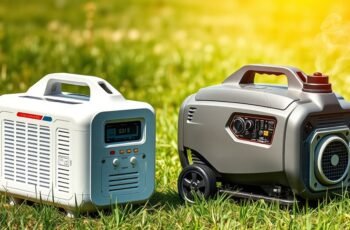
Power stations are compact, rechargeable devices that store electrical energy in batteries. You can charge them beforehand and use them to power small appliances, phones, or laptops on the go. They’re quiet, easy to transport, and require minimal maintenance.
Generators, on the other hand, produce electricity by burning fuel like gasoline or diesel. They’re often larger, noisier, and need regular refueling. Generators are great for heavy-duty power needs during outages or remote work sites.
Both options offer portability, but they operate differently—power stations store energy, while generators generate it on demand. Understanding these basics helps you decide which suits your needs best.
How Do They Work? Comparing Power Stations and Generators
Power stations and generators operate quite differently, even though both provide portable electricity. Power stations, often called portable power banks or batteries, store energy in large batteries. When you turn them on, they convert stored DC power into AC electricity through an inverter, supplying your devices directly. These units typically use lithium-ion or similar batteries and are recharged via wall outlets, solar panels, or car chargers.
Generators, on the other hand, generate electricity on demand using fuel. Inside, a combustion engine powers a rotor within a magnetic field, producing AC power through electromagnetic induction. They need gasoline, diesel, or propane to operate and produce electricity continuously until fuel runs out.
While power stations store energy ready to use, generators create power instantly through mechanical means.
Are Power Stations or Generators More Portable for Outdoor Use?
When it comes to outdoor activities, deciding which device is more portable can make a big difference. Power stations are generally more compact and lightweight, making them easy to carry on hikes, camping trips, or picnics. They often come with built-in handles, and some are designed to fit into backpacks.
Generators, on the other hand, tend to be bulkier and heavier, which can make transportation challenging unless you have a vehicle to move them.
Portable power stations also produce less noise, allowing for quieter outdoor environments. If portability is your priority, a power station offers a more convenient option, especially for short trips or activities where weight and size matter.
Generators are better suited for fixed or semi-permanent outdoor setups due to their size and weight.
How Much Do They Cost, and What Maintenance Is Needed?
Cost is a significant factor when choosing between a power station and a generator, especially if you’re planning to use them regularly or for specific projects. Power stations tend to cost more upfront, often ranging from $300 to $1,000 or more, but they usually require less maintenance and have fewer parts to replace.
Generators are generally cheaper initially, with portable models starting around $200, but maintenance costs can add up over time. You’ll need to regularly check and change oil, replace filters, and ensure proper fuel storage for generators.
Power stations, on the other hand, require minimal maintenance—mainly occasional cleaning and software updates if applicable. Consider your budget and how much ongoing upkeep you’re willing to handle before making a decision.
Which Is Safer and More Environmentally Friendly?
Although both power stations and generators have environmental impacts, power stations generally pose fewer safety and environmental concerns. Power stations typically produce electricity more efficiently and with cleaner emissions, especially if they use renewable energy sources.
They often have stricter safety protocols and emission controls, reducing risks to both people and the environment. Generators, especially small portable ones, tend to rely on fossil fuels like gasoline or diesel, which emit higher levels of pollutants and pose fire hazards.
They also produce carbon monoxide and other dangerous fumes if used improperly indoors. Overall, power stations are safer and more environmentally friendly because they operate more efficiently, produce fewer emissions, and are designed with safety standards in mind.
Tips for Choosing the Best Power Solution for Your Needs
Choosing the right power solution depends on understanding your specific needs and how you plan to use it.
First, consider the power capacity you require—do you need to run small devices or power larger appliances?
Next, think about portability; if you frequently move around, a lightweight power station might suit you better.
Also, evaluate fuel availability and noise levels—generators often produce more noise and require fuel, while power stations are quieter and often rechargeable.
Determine your budget, and check for features like multiple outlets, charging options, and battery life.
Finally, assess the environment where you’ll use it—some solutions are better suited for outdoor use, while others excel indoors.
Making an informed choice ensures you get a reliable, convenient power source tailored to your needs.
Conclusion
Ultimately, choosing between a power station and a generator depends on your needs. If you want something portable, quiet, and eco-friendly for outdoor activities or emergency backup, a power station is your best bet. It’s safer, easier to maintain, and less disruptive. But for heavy-duty, long-term power needs, a generator might be necessary. Consider your usage, budget, and safety to make the right choice for reliable, convenient power whenever you need it.