Ad Blocker Detected
Our website is made possible by displaying online advertisements to our visitors. Please consider supporting us by disabling your ad blocker.
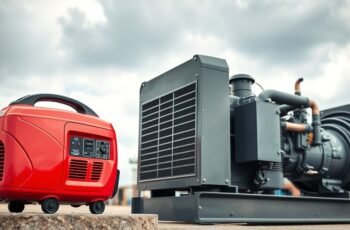
As we evaluate energy solutions, it’s essential to compare quiet power stations with traditional noisy generators, especially considering their technical efficiency and environmental impact. While quiet stations leverage advanced inverter and battery technology for cleaner, quieter operation, noisy generators remain prevalent due to initial cost. Understanding their distinct advantages and limitations is critical for making informed choices that align with sustainability goals and practical needs—a discussion that becomes increasingly relevant as eco-consciousness shapes our energy landscape.
Key Takeaways
- Quiet power stations utilize inverter technology and advanced batteries for minimal noise and emissions, unlike noisy generators relying on combustion engines.
- They have lower environmental impact, integrating renewable energy sources and reducing reliance on fossil fuels.
- While more expensive upfront, quiet stations offer long-term savings through reduced fuel and maintenance costs.
- Quiet stations are ideal for residential, outdoor, and emergency use due to their low noise and high reliability.
- Noisy generators produce disruptive sound levels, impacting comfort and health, and are less suitable for noise-sensitive environments.
How Do Quiet Power Stations Work Compared to Traditional Generators
While traditional generators produce power through combustion engines that operate loudly and emit significant noise, quiet power stations utilize advanced inverter technology and sound-dampening designs to minimize noise levels. These stations optimize battery efficiency by converting stored electrical energy into usable power with minimal energy loss, enhancing overall performance. Unlike traditional models that rely heavily on fuel consumption, quiet power stations are often powered by rechargeable batteries, reducing reliance on fossil fuels and lowering emissions. Their inverter technology enables precise voltage regulation, improving efficiency and stability. This approach results in lower fuel consumption, making them more eco-conscious. By integrating smart energy management, these stations deliver cleaner, quieter power, emphasizing sustainability and operational efficiency over the noisy, less efficient combustion-based generators.
Benefits of Quiet Power Stations for Residential and Outdoor Use
The quiet operation of power stations offers significant advantages for residential and outdoor applications by minimizing noise pollution and enhancing safety. Reduced noise levels contribute to a more comfortable environment, especially in quiet neighborhoods or during outdoor gatherings. Additionally, these stations often feature advanced battery longevity, ensuring sustained power over extended periods without frequent replacements. Visualize:
- a family enjoying their backyard without disruptive engine sounds,
- a camper relying on a silent power source deep in nature,
- a community event thriving without the hum of noisy generators.
This eco-conscious technology not only curtails noise pollution but also promotes efficient energy storage, reducing environmental impact. The combination of silent operation and durable batteries makes quiet power stations ideal for sustainable, reliable outdoor and residential use.
The Downsides of Noisy Generators in Urban and Public Spaces
Noisy generators in urban and public spaces pose significant challenges to environmental quality and public health. Elevated levels of urban noise disrupt the acoustic environment, contributing to chronic stress, sleep disturbances, and cardiovascular issues among residents. These generators generate continuous, high-decibel sound levels that amplify public disturbance, especially in densely populated areas. The persistent noise pollution hampers communication, reduces outdoor activity quality, and diminishes overall well-being. Additionally, the environmental impact extends beyond noise; increased fuel consumption leads to higher emissions, further degrading air quality. The combination of urban noise and public disturbance from these generators underscores the need for quieter alternatives that mitigate health risks and preserve urban tranquility. Addressing these downsides is essential for fostering healthier, more sustainable public spaces.
Key Factors to Consider When Choosing Between Quiet Power Stations and Noisy Generators
Choosing between quiet power stations and noisy generators requires careful consideration of multiple factors that directly impact environmental sustainability and operational efficiency. Key among these are:
Selecting between quiet power stations and noisy generators hinges on sustainability and efficiency considerations.
- Noise levels, influencing site suitability and community impact.
- Renewable energy compatibility, ensuring integration with solar or wind sources for eco-friendly operation.
- Battery technology, determining storage capacity, reliability, and the potential for off-grid use.
Quiet power stations often leverage advanced battery technology to provide clean, silent energy, making them ideal where noise and emissions matter. Conversely, noisy generators may still excel in high-demand scenarios but often lack renewable energy integration. Evaluating these factors helps us select solutions that balance sustainability with performance, aligning operational goals with environmental responsibility.
How Much Do Quiet Power Stations Cost Versus Noisy Generators
When comparing costs, quiet power stations typically require a higher initial investment than traditional noisy generators, primarily due to advanced battery technologies and eco-friendly components. The cost comparison reveals that while the upfront expense is greater, the long-term savings from reduced fuel and maintenance costs can offset this difference. Market availability of quiet power stations has increased, with a broader selection of models incorporating sustainable materials and smart energy management systems. Conversely, noisy generators remain more affordable initially but often involve ongoing fuel costs and higher maintenance expenses. The shift toward eco-conscious technology has driven prices upward for quiet stations, yet their environmental benefits and quieter operation justify the premium for many users. Overall, the investment reflects a balance between upfront cost and sustainable, efficient power solutions.
Which Power Source Is Better for Emergency Backup and Remote Locations?
When choosing a power source for emergency backup or remote sites, we must consider noise levels and how they impact comfort, especially in sensitive environments. Reliability and ease of maintenance are also critical, as remote locations demand consistent performance with minimal intervention. By analyzing these factors, we can determine which system offers the most sustainable and efficient solution.
Noise Levels and Comfort
Despite their critical role in emergency and remote settings, the noise levels produced by power sources considerably impact their practicality and user comfort. Quiet power stations excel here through advanced sound insulation, markedly reducing noise pollution and enhancing environmental harmony. Conversely, noisy generators generate sound levels that can reach disruptive decibel ranges, causing discomfort and health concerns. To visualize:
- A silent power station operates discreetly, blending into the surroundings.
- A noisy generator produces a constant, high-decibel hum, disturbing nearby wildlife.
- Sound insulation in quiet stations diminishes noise transmission, maintaining tranquility.
Reliability and Maintenance
While both quiet power stations and noisy generators serve as essential backup sources, their reliability and maintenance requirements differ considerably in emergency and remote settings. Quiet power stations often feature advanced sound insulation and vibration control, reducing wear and tear on components and lowering long-term maintenance needs. Their sealed enclosures minimize environmental exposure, improving durability and reducing routine checks. Conversely, noisy generators, with less emphasis on sound insulation and vibration management, are more prone to mechanical fatigue, increasing maintenance frequency. Remote locations demand dependable, low-maintenance solutions; quiet stations’ design allows for easier oversight and longer service intervals, making them more reliable over time. Ultimately, the eco-conscious engineering of sound insulation and vibration control enhances both reliability and ease of maintenance in these critical applications.
Comparing Maintenance and Longevity of Quiet Power Stations and Generators
Although quiet power stations often incorporate advanced, low-maintenance components, their overall longevity can surpass that of traditional noisy generators due to their streamlined design and reduced wear and tear. These systems benefit from fewer moving parts and integrated renewable options that minimize degradation over time. Visualize:
- Robust modular components that withstand environmental stress,
- Automated self-diagnostics reducing manual upkeep,
- Superior cooling systems that extend operational life.
This design focus not only enhances durability but also reduces noise pollution, contributing to eco-conscious operation. The use of renewable options within quiet power stations further extends their lifespan, as they rely less on consumables and fossil fuels. Consequently, maintenance becomes more predictable and less frequent, making them a sustainable long-term investment compared to traditional generators.
Environmental Impact: Quiet Power Stations vs Noisy Generators
As we evaluate their environmental footprints, it becomes clear that quiet power stations generally have a markedly lower ecological impact compared to traditional noisy generators. These stations often integrate renewable energy sources, such as solar or wind, substantially reducing reliance on fossil fuels. This shift directly contributes to emission reduction, minimizing greenhouse gases and other pollutants. Noisy generators typically produce higher emissions due to inefficient combustion processes and lack of emission controls, exacerbating air quality issues. Quiet power stations’ design emphasizes sustainable operations, aligning with eco-conscious principles. Their capacity to harness renewable energy not only curtails carbon footprints but also promotes long-term environmental resilience. Overall, quieter power solutions present a more sustainable alternative with a considerably reduced ecological impact, advancing global efforts toward cleaner energy and emission mitigation.
Making the Right Choice: Is a Quiet Power Station Suitable for Your Needs?
When choosing a quiet power station, we consider factors like noise levels and user comfort, especially in sensitive environments. Portability and convenience are essential for outdoor or emergency use, while power output and capacity determine if it can meet your energy demands. Ultimately, evaluating these technical aspects helps determine if a quiet station aligns with your specific needs and eco-conscious priorities.
Noise Levels and Comfort
Choosing between a quiet power station and a noisy generator hinges considerably on noise levels and user comfort, as these factors directly impact usability in various environments. A quiet power station employs advanced sound insulation techniques, markedly reducing noise pollution and ensuring minimal disruption. Visualize:
- A peaceful campsite, where ambient noise remains low, preserving natural tranquility.
- An emergency setup near a residential area, where low sound emissions prevent disturbance.
- An outdoor event, where controlled noise levels enhance comfort for attendees.
Portability and Convenience
The portability and convenience of a power source considerably influence its practicality across diverse scenarios. Quiet power stations excel here due to their optimized portability design, enabling easy transport without sacrificing battery efficiency. Their lightweight, compact form factors make them ideal for outdoor activities or emergency use, where mobility is essential. To illustrate:
| Feature | Traditional Generator | Quiet Power Station | Impact |
|---|---|---|---|
| Portability Design | Bulky, heavy | Lightweight, compact | Easier to carry and store |
| Battery Efficiency | Limited runtime | Extended use with efficient batteries | Long-lasting power on the go |
| Ease of Use | Manual setup | Plug-and-play | User-friendly, minimal effort |
| Eco-Consciousness | Fuel-dependent | Electric, emission-free | Environmentally friendly |
This technical edge makes quiet power stations a superior choice for those valuing convenience and eco-efficiency.
Power Output and Capacity
While quiet power stations excel in portability and eco-friendliness, their power output and capacity must match your energy demands to determine suitability. Advancements in power efficiency and technology have expanded their capabilities, but limitations remain. Visualize this:
- Small devices, like smartphones or LED lights, requiring minimal power.
- Medium loads, such as laptops or small appliances, needing moderate capacity.
- Heavy-duty equipment, like power tools, demanding high output and sustained energy.
Modern quiet stations often feature scalable batteries and inverter technology, optimizing power efficiency. However, their capacity may fall short for continuous or high-demand applications, unlike traditional noisy generators. Careful assessment of your usage profile and understanding technological limits ensures you select a power station that balances capacity with environmental considerations.
Frequently Asked Questions
How Do Noise Levels Affect Community Health and Well-Being?
Noise pollution profoundly impacts community health, as elevated noise levels can cause stress, disrupt sleep, and harm mental health, highlighting the need for eco-conscious solutions like quieter power stations to promote well-being and sustainable living.
Are Quiet Power Stations More Energy-Efficient Than Noisy Generators?
We find quiet power stations generally more energy-efficient than noisy generators, as they optimize energy consumption and reduce noise pollution, leading to better ecological outcomes and operational efficiency, essential for sustainable energy practices and community health.
Can Quiet Power Stations Handle Large-Scale Power Demands?
Certainly, quiet power stations can handle large-scale demands by harnessing renewable sources and advanced energy storage, ensuring efficient, eco-conscious operation; their capacity depends on design, technology, and integration, making them viable for substantial power requirements.
What Safety Features Do Quiet Power Stations Typically Include?
We find that quiet power stations typically include robust safety protocols and noise insulation, ensuring eco-conscious operation. These features protect users and the environment, making them reliable, secure, and efficient for large-scale demands while minimizing noise pollution.
Are There Any Government Incentives for Adopting Quiet Power Stations?
We find that government subsidies and favorable regulatory policies often support adopting quiet power stations, encouraging eco-conscious choices by reducing noise pollution and emissions, aligning industry standards with sustainable energy goals and technological advancements.
Conclusion
In our quest for sustainable energy solutions, choosing a quiet power station isn’t just smart—it’s revolutionary. These eco-friendly marvels outshine noisy generators in every metric, offering unmatched longevity, minimal environmental impact, and seamless integration with renewable sources. Opting for silence and efficiency isn’t merely a preference; it’s a profound commitment to safeguarding our planet’s future while ensuring reliable power. Embrace the future of energy—quiet, clean, and undeniably superior.