Ad Blocker Detected
Our website is made possible by displaying online advertisements to our visitors. Please consider supporting us by disabling your ad blocker.
We should minimize risk by treating weather exposure as a controlled hazard rather than a nuisance. When we place and enclose a generator properly, with seals, ventilation, and elevated, non-conductive supports, we reduce moisture ingress and corrosion. We’ll outline clear steps for weatherproofing, including fuel and battery accessories, desiccants, and seasonal checks, then connect them to a practical maintenance plan. Let’s consider how each measure protects performance and reliability as conditions change.
Key Takeaways
- Use a sturdy, weatherproof enclosure with proper seals, ventilation, and accessible service doors to protect the generator from rain, snow, and humidity.
- Elevate the unit on non-conductive pads with wind protection and oriented drainage to prevent flooding and condensate buildup.
- Maintain clear intake and exhaust paths with rain channels and drip edges to avoid blockage and overheating.
- Implement fuel and battery weatherproofing: sealed containers, vented caps, desiccants, dry fuel lines, and fully charged, secure battery mounting.
- Establish seasonal maintenance and winterization routines, documenting inspections, fuel stabilization, oil checks, and safety shutdown tests.
Identify Weather Risks to Your Outdoor Generator (Rain, Snow, Heat, Humidity)
Identifying weather risks to your outdoor generator is essential for reliable operation. We assess how rain, snow, heat, and humidity interact with electrical components, combustion, and ventilation, so you’re prepared for any event. Weather hazards include water ingress, corrosion, and condensate buildup that can impair ignition, fuel stability, and sensor performance. We emphasize proper outdoor placement to minimize exposure: avoid low spots, direct splash zones, and areas with standing moisture. We inspect seals, cables, and air intakes for vulnerabilities that could be worsened by precipitation or humidity. Our approach prioritizes shielding critical connections, maintaining dry operation, and monitoring ambient temperatures to prevent overheating. By recognizing these risks, you safeguard performance and extend generator life under diverse conditions.
Placement and Enclosures for Weather Protection
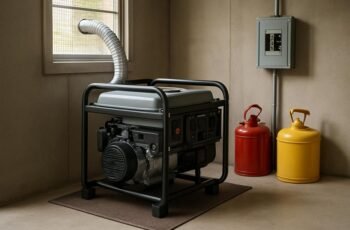
Placement and enclosures are essential for weather protection. We present placement considerations that minimize exposure, allow airflow, and ease maintenance, while prioritizing safety. Choose sturdy enclosure materials that resist moisture and corrosion, and ensure sealing without overheating. Provide wind protection to reduce vibration and gust impact, yet maintain ventilation safety for cooling. Include access for routine checks, fuel stabilization, and trickle charging connections. Elevate units off the ground on level, non-conductive pads to prevent flooding and static buildup. Ensure rain channels and drip edges direct runoff away from intakes and outlets. Use a simple, documented enclosure design with labeled service ports and grounding. Table illustrates options for layout and airflow.
| Area | Feature | Benefit |
|---|---|---|
| Intake | Path clarity | Reduced blockage |
| Vent | Guarded grille | Safe cooling |
| Service | Access door | Easy maintenance |
Weatherproofing Accessories for Fuel and Battery
Weatherproofing accessories for fuel and battery must be used correctly to prevent moisture ingress, corrosion, and performance loss. We approach fuel and battery protection with purpose: select sealed containers, vented caps only when appropriate, and moisture-absorbing desiccants where recommended. Use weatherproofing accessories that maintain seal integrity during vibration and temperature fluctuations, and verify compatibility with generator fuels and electrolytes. Keep fuel lines dry, cap and seal fuel tanks after refueling, and store in a cool, shaded area to minimize condensation. For batteries, choose corrosion-resistant terminals, weatherproof enclosures, and insulated housings that permit ventilation without exposing components. Regularly inspect seals, plugs, and grommets for wear. Document maintenance, follow manufacturer guidance, and prioritize safety to ensure reliable, fuel and battery protection under adverse conditions.
Seasonal Maintenance Routine to Extend Lifespan
Seasonal maintenance routines keep generators reliable and safe across changing conditions, so we schedule inspections, testing, and basic service at each seasonal milestone.
Seasonal generator maintenance keeps systems reliable through changing conditions with scheduled inspections and essential service.
We perform a concise, technical routine focused on longevity and reliability. We emphasize weatherproof ignition and fuel stabilization to minimize degradation and start-up failures. We verify connections, clean vents, check oil levels, and test safety shutdowns. We conduct fuel stabilization measures, inspect fuel lines, and replace filters as needed. We document conditions and schedule the next cycle, reducing failure risk. We avoid unnecessary steps that don’t impact lifespan in the field.
- Inspect ignition wiring and seals for weatherproof integrity
- Stabilize fuel and drain or treat stale fuel
- Test battery, spark, and safety switches
- Schedule next inspection and record findings
Winterize and Start-Up Checklist for Cold Climates
Winterizing for cold climates starts with securing the generator against moisture and cold so it starts reliably when temperatures drop. We begin with a complete winterizing checklist that targets critical components: fuel system, battery, and ventilation. Inspect fuel lines for cracks, replace old fuel, and add stabilizer to prevent gumming. Check the battery, terminals, and electrolyte level; ensure a full charge and proper mounting to avoid vibration damage. Protect intake and exhaust from snow and ice, and verify cooling fins remain unobstructed. Empty condensate from the exhaust if applicable. Prior to startup, confirm oil viscosity suits ambient temperatures and perform a controlled test run with load steps. Document startup considerations and inspection results, and store safety gear nearby for quick response. Maintain clear, labeled shutoff and service access.
Frequently Asked Questions
How Often Should I Replace a Weatherproof Cover for Efficiency?
We replace weatherproof covers every 1–3 years, depending on exposure and wear. In our weatherproof maintenance plan, we prioritize inspection, seal integrity, and corrosion checks to ensure safety, efficiency, and reliable operation for you and us.
Can a Generator Run Safely Indoors With Ventilation?
We don’t run a generator indoors; it’s unsafe. For indoors safety, use proper ventilation and never exceed ventilation limits. We’ll vent exhaust outdoors, guard fumes, and follow manufacturer guidance to prevent carbon monoxide hazards.
Do Weatherproof Plugs Affect Fuel Efficiency or Power Output?
Weatherproof plugs don’t enormously affect fuel efficiency or power output. We note minor, negligible losses; prioritize proper sealing and venting for safety, moisture prevention, and reliable starting. We’ll monitor performance, ensuring Weatherproof plugs meet manufacturer specs and safety standards.
What Height Should a Generator Be Mounted off the Ground?
We should mount the generator at least 12 inches off the ground to avoid water, debris, and flooding. Generator mounting should follow manufacturer specs, with secure, level placement; and consider weather considerations, ventilation, and code-compliant clearances.
Are There Wind-Rated Enclosures for Exposed Locations?
We do have wind-rated enclosures for exposed locations, and we recommend them whenever wind exposure is high. These protect critical components, reduce debris impact, and maintain safe operation in exposed locations without compromising cooling.
Conclusion
We’ve mapped the dangers, armored the setup, and stocked the essentials, so your generator stands ready like a steadfast beacon in the storm. By elevating, sealing, and venting properly, we keep moisture at bay and sparks in check. Regular checks are our lighthouse keepers—steady, disciplined, nonnegotiable. Treat winter and rain as partners, not adversaries. Stay vigilant, document every seal and vent, and run seasonal drills until reliability becomes second nature. Safety, efficiency, peace of mind.