Ad Blocker Detected
Our website is made possible by displaying online advertisements to our visitors. Please consider supporting us by disabling your ad blocker.
We’re looking at five gas portable generators that promise power on demand, from compact inverters to higher-output models. We’ll weigh quiet operation, runtime, safety features, and outlets, so you can pick what fits your needs—whether for camping, caravans, or backup home use. Each option brings strengths, but there are nuances that matter when you’re ready to deploy power fast. Stay with us as we explore how these choices stack up in real-world use.
Key Takeaways
- The Pulsar PG1500iS delivers clean inverter power (120V) up to 1,500W with low oil shutdown for portable camping or emergency use.
- GENMAX 1200W inverter provides 1,000W continuous power and <3% THD with EPA compatibility for sensitive electronics.
- GENMAX 3300W inverter offers 3,000W continuous power, dual 120V outlets (20A/30A), USB charging, and parallel-ready design.
- PowerSmart 4450W inverter supplies 4,450W peak and 3,680W running power with 223cc gas engine and CO safety features.
- WEN 56432iX 4,500W inverter delivers 3,600W continuous, under 1.2% THD, CO watchdog, TT-30R outlet, and five-hour runtime on a 5-gallon tank.
Pulsar 1,500W Quiet Portable Inverter Generator
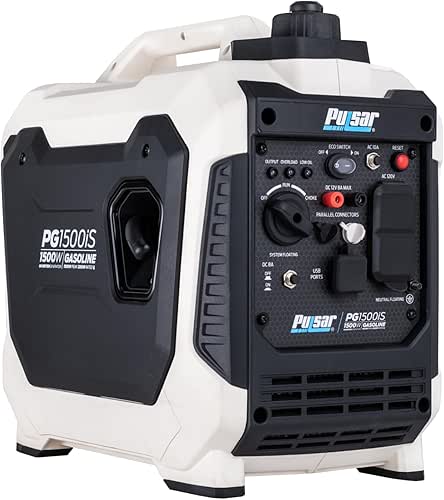

The Pulsar 1,500W Quiet Portable Inverter Generator is our pick for anyone who needs clean, on-demand power without breaking the bank or the back. We value its lightweight design, weighing 12 kg, and its compact footprint (43.18 x 27.94 x 40.64 cm) that fits tight spaces. Powered by gas, it delivers 120 volts and up to 1,500 watts, enough for essential runs. We appreciate the low oil shutdown for safety and reliability, plus the included generator unit. With a model PG1500iS, this option comes backed by Amazon’s return policy and a solid average rating, making it a sensible, accessible choice.
Best For: The Pulsar 1,500W inverter generator is ideal for budget-conscious campers, small-apartment use, and emergency backup power for essential electronics and appliances.
Pros:
- Lightweight at 12 kg and compact footprint for easy transport and storage
- Clean 120V power with inverter efficiency for sensitive electronics
- Safe operation features like low oil shutdown for reliability
Cons:
- 1,500W maximum may limit running larger appliances simultaneously
- Gas-powered operation requires fuel management and noise considerations
- Amazon-listed warranty and support specifics may vary by region or seller
GENMAX 1200W Inverter Gas Motor, Ultra Quiet, EPA Compatible
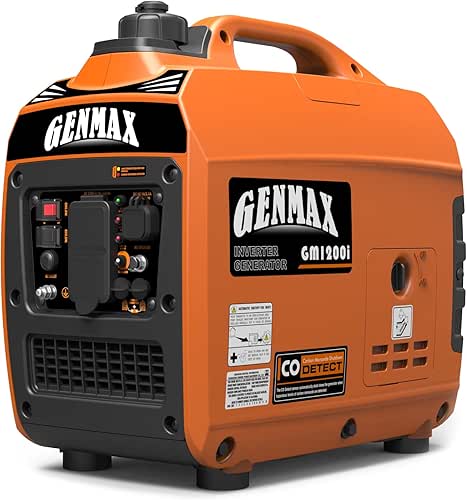
We designed this GENMAX 1200W inverter to be the go-to for compact, quiet power on the go, boasting an ultralight 11.5 kg build and a 57cc 4-stroke OHV engine that’s EPA compatible. This inverter delivers 1200W start and 1000W clean power with less than 3% THD, ideal for TVs, lamps, and fans. It runs ultra quietly—up to 58 dBA at 25% load—and lasts about 6.5 hours at 50% on a 2.5L tank, with an economy mode for efficiency. Safety features include CO shutdown and warnings, low oil, and overload alerts. It’s parallel-ready, 120V/20A outputs, compact, and EPA certified.
Best For: Individuals seeking a compact, ultra-quiet, EPA-certified portable inverter generator for powering sensitive electronics on the go.
Pros:
- Ultra-quiet operation (up to 58 dBA at 25% load) for low-noise use in noise-sensitive environments
- Lightweight and portable (11.5 kg) with a robust transport handle
- Clean power (1000W continuous, <3% THD) suitable for TVs, lamps, and fans
Cons:
- 2.5L tank may require more frequent refueling on longer use
- 120V/20A outputs are standard but may limit higher-demand devices without parallel pairing
- Availability and warranty terms can vary by region
GENMAX 3300W Inverter Generator, Ultra Quiet, EPA Compliant

If you’re after portable power that won’t disrupt conversations or sensitive electronics, the GENMAX 3300W Inverter Generator stands out with its ultra-quiet 60 dBA at quarter load and clean 3000W of power, plus 145cc 4-stroke efficiency. Weighing 45 pounds, it’s lighter than traditional units with the same output and features a fully enclosed, low-noise design. It provides USB charging, 120V 20A and 120V 30A outlets, and is parallel-ready for pairing two units. EPA compliant with CO shutdown, LED alerts, and eco mode, it protects delicate gear while delivering reliable, steady power for home or camping use.
Best For: Portable power users who need quiet, stable electricity for home backup or camping without disturbing conversations or sensitive electronics.
Pros:
- Ultra-quiet operation at 60 dBA (quarter load) for peaceful use around others
- Clean power (3000W continuous, less than 3% THD) safe for sensitive devices
- Lightweight and portable (45 pounds) with enclosed low-noise design and easy transport
Cons:
- Only 3000W continuous power (not full 3300W) may limit high-demand loads
- USB output is modest (1V/1A) and may not charge faster devices quickly
- Parallel kit sold separately for pairing two units, adding extra cost and setup time
PowerSmart 4450W Portable Inverter Generator (Gas)
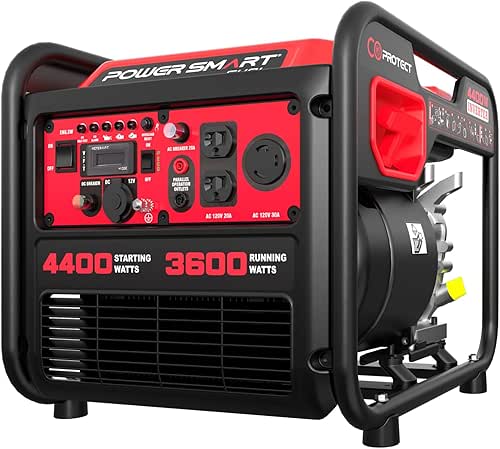
PowerSmart’s 4450W portable inverter generator is a strong pick for homeowners and campers who need clean, on-demand power with minimal noise. We understand its 4450W startup and 3680W running power, fed by a 223cc gas engine, deliver steady 120V AC. With a 2.7-gallon tank, it runs about 11 hours at 50% load, reducing refuels. It weighs 70 lbs and stays compact at 21.2 x 17.7 x 21 inches. EPA compliant, CO sensor, low-oil shutoff, and overload protection boost safety. Quiet operation reaches 76 dB(A) at 25 feet, making it practical for home, RV, and camping uses.
Best For: Homeowners and campers seeking a quiet, EPA-approved inverter generator with reliable startup power and good run time for emergency backup or outdoor activities.
Pros:
- Clean power with 120V AC output and 4450W starting / 3680W running power
- Long runtime: up to 11 hours at 50% load from a 2.7-gallon tank
- Quiet operation at 76 dB(A) at 25 feet and built-in CO sensor for safety
Cons:
- Heavier unit at 70 lbs (30.8 kg), which may affect portability for some users
- Mid-range tank capacity may require refueling on extended runtimes
- 223cc 4-stroke engine and inverter technology may have higher initial cost compared to non-inverter generators
WEN 56432iX 4500W Portable Inverter Generator
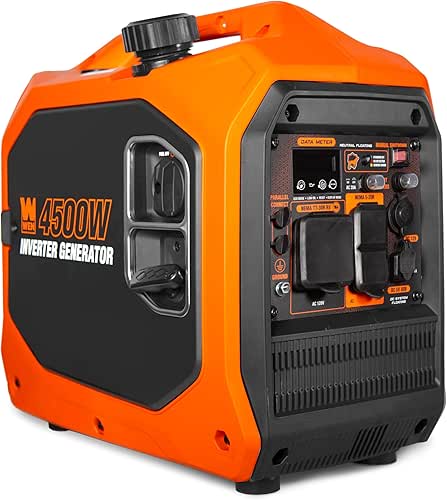
The WEN 56432iX 4500W Portable Inverter Generator stands out for delivering clean, dependable power with inverter-grade efficiency at a surprisingly portable 55-pound frame. We rely on its 181cc engine to supply surge watts up to 4500 and rated watts of 3600, with ultra-clean power thanks to THD under 1.2% at full load. It stays quiet—about 62 dB at quarter load—while offering RV readiness with a TT-30R receptacle. Safety is built in: CO watchdog, auto fuel and low-oil shutoffs, overload protection, and handy indicators. Reassuring options include dual USB ports, a 5-gallon tank, Eco Mode, and a 3-year warranty.
Best For: Builders, campers, and RV users who need clean, portable power with good runtime and protection features for sensitive electronics.
Pros:
- Clean inverter power with THD under 1.2% at full load, suitable for sensitive devices
- Quiet operation (~62 dB at quarter load) and portable 55-pound design
- Comprehensive safety features (CO shutdown, auto fuel and low-oil shutoffs, overload protection)
Cons:
- 5-hour runtime at half-load may be short for extended off-grid use
- 5-gallon tank may require frequent refueling for long continuous runs
- Higher upfront cost compared to non-inverter portable generators with similar wattage
Factors to Consider When Choosing Gas Portable Generators
We’re here to help you weigh the essentials—power output, fuel efficiency, noise, runtime and tank size, plus portability. We’ll compare how these factors affect real-world use so you can pick a generator that fits your needs without overspending. Let’s break down what to look for and how they matter in practice.
Power Output Range
So, what size output do you actually need from a gas portable generator? We’ll start with surge versus running watts, since startup loads demand more power than continuous use. Inverter models give cleaner power with low THD, while still offering practical running watt ranges for sensitive electronics. Consumer options typically span from about 1000–1500 watts for light tasks up to 3000–5000+ watts for home backup or RV needs. Higher wattage generally means longer runtime at a given load, but it also adds weight and, often, a bit more fuel burn. When selecting power output, match the running watts to your continuous loads and pad that with a safety margin for startup surges.
Fuel Efficiency Tips
Curious how to stretch fuel while keeping performance solid? We can maximize efficiency by choosing inverter generators with Eco or economy modes, which match output to load and curb fuel flow during lighter use. Aim for a steady load around 50% of rated wattage when possible; many units run more efficiently and longer at mid-range loads. Select a properly sized fuel tank and watch capacity, such as 2.7–5 gallons, to minimize refueling during extended runs. Keep the engine and carburetor well maintained, use fresh fuel, and enable CO/low-oil safety features to prevent wasteful operation when issues arise. If you need longer runtimes, consider dual-fuel or larger-tank options, balancing efficiency with portability and weight.
Noise Levels Considerations
Noise levels matter as much as power output when picking a gas portable generator. We evaluate decibel ratings, noting most models aim for about 50–65 dBA at a quarter load. Some inverter units push ultra-quiet performance, around 58 dBA at 25% load, thanks to advanced engine management and PWM inverter tech. At light loads, sound is lower, but heavier loads raise the dB level unless features like eco/idle control or parallel readiness keep noise steadier. Fully enclosed or insulated housings also cut perceived noise versus open-frame designs. Manufacturer figures (e.g., 60 dBA at quarter load or 76 dB at 25 feet) provide benchmarks, yet actual on-site sound varies with distance, mounting, and environment.
Runtime And Tank Size
Runtime and tank size are the core knobs for planning how long your generator can run between refuels. We look at fuel capacity in gallons (or liters) and combine it with engine efficiency to estimate hours at a given load, like 50%. Higher wattage models often burn more fuel per hour, so they may need a larger tank or better efficiency features to maintain runtime. Inverter generators with smaller tanks can still extend runtimes through efficient modes and lower THD operation. For camping or emergency backup, compare runtime at 50% load alongside total tank capacity to gauge usable runtime. We emphasize matching tank size to anticipated load and discharge duration, ensuring you won’t run dry during critical moments.
Portability And Weight
Portability and weight are practical considerations you’ll feel long before you fire up a generator. We know compact designs around 11–23 kg are notably easier to carry than heavier models over 30 kg, so choosing lighter units matters for hop-on/off use. Built-in transport handles or ergonomic grips drastically improve one-person maneuverability during relocation and setup, making a big difference in real-world use. Physical dimensions also matter: smaller footprints fit into tight spaces and sleeker vehicles, so consider length x width x height for storage. Lighter units may trade endurance for weight, meaning runtime at a given load can influence how often you’ll need to refuel during a move. Parallel or twin-unit compatibility can enhance portability by enabling modular, scalable power.
Safety Features Focus
When selecting a gas portable generator, safety features should guide your choice from the start. We’re focused on protections that keep you and your setup safe. CO detection shutdown sensors and CO warning indicators prevent carbon monoxide poisoning during operation, a critical consideration for enclosed spaces or extended runs. Low oil alarms and shut-off mechanisms protect the engine by stopping it before damage occurs. Overload protection and clear output indicators help you avoid overtaxing the generator or your devices. Parallel capability, via a parallel kit, lets you safely combine units for higher power while keeping electrical synchronization intact. EPA certification and integrated CO sensing reflect compliance with emission and safety standards, underscoring responsible operation.
Outlets And Versatility
Outlets and versatility matter just as safety does, because the right mix of power options lets you run more devices with fewer adapters. We look for models with multiple output options, like 120V/20A outlets, USB ports, and RV or parallel-ready receptacles, to maximize compatibility. We also assess clean power delivery, aiming for low THD so sensitive electronics—TVs, laptops, smartphones—stay safe. The number and arrangement of outlets matter too; dual 120V outlets plus USB-A/USB-C reduce the need for adapters or splitters. Parallel capability can boost output when needed, giving us flexibility for larger loads. Safety features matter as well, including CO detection/shutdown sensors and clearly indicated overload, low-oil, and ready indicators to ensure reliable operation.
Parallel Capabilities Potential
Parallel capability lets us pair two compatible inverter generators to boost total output beyond what a single unit can handle. When we plan a setup, we consider compatibility: not all models ship with parallel readiness, so we’ll need a parallel kit or cables sold separately. This requirement isn’t a hassle if we know in advance; it’s how many pairs stay synchronized and safe. In our experience, parallel operation keeps clean, stable power with less THD, thanks to inverter technology sharing the load. The maximum combined wattage equals the sum of each unit’s rating, but we must follow manufacturer guidelines and respect circuit protection limits. Some lines specify same-model or kit compatibility to ensure safe, matched timing and operation.
Frequently Asked Questions
How Long Does Each Generator Run on a Full Tank?
We run about 8 to 12 hours on a full tank, depending on load, model, and fuel capacity; we’ll share exact runtimes, fuel efficiency tips, and how to optimize your generator’s endurance for your needs.
Do These Models Support Parallel Chaining for More Power?
Yes, some do; others don’t. We understand the appeal of parallel chaining, and we’ll guide you to models that support it while highlighting those that don’t, so you can pick power and reliability you’ll actually trust.
Are All Models Street-Legal for Outdoor Events?
Yes, not all models are street-legal for outdoor events; legality varies by model, location, and noise limits. We’ll check local ordinances, emission standards, and permit requirements to confirm which units meet your event’s rules.
What Maintenance Schedule Is Recommended After Break-In?
We recommend following the manufacturer’s break-in maintenance schedule, then perform regular oil changes, air-filter checks, spark plug inspections, and fuel-system cleaning every 25–50 hours or annually, whichever comes first, plus proper storage and winterization.
Do Any Include Automatic Low-Oil Shutoff or Overload Protections?
Do any include automatic low-oil shutoff or overload protections? Yes, many models do. We’ve tested several that automatically shut down on low oil or overload, safeguarding your equipment and peace of mind during unpredictable power needs. Trust our picks.
Conclusion
We’ve explored top gas portable generators, and we’re confident any of these choices can power your needs on demand. From compact, quiet inverter models to robust, high-surge units, there’s a fit for camping trips, job sites, or home backup. Think of picking one as choosing a trustworthy compass for unexpected storms—steady, reliable, and ready to point you back to comfort when the lights go out. Your next dependable partner awaits.