Ad Blocker Detected
Our website is made possible by displaying online advertisements to our visitors. Please consider supporting us by disabling your ad blocker.
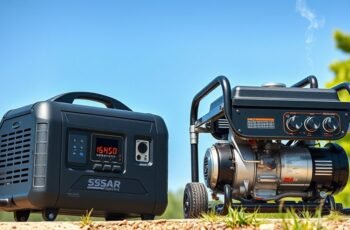
When evaluating portable power sources, understanding the fundamental differences between power stations and generators is essential for making an informed choice. Both serve critical roles but differ markedly in operation, capacity, and environmental impact. As we analyze their technical specifications and practical applications, it becomes clear that selecting the right device depends on specific needs and constraints. To fully grasp these distinctions, consider how each option aligns with your power requirements and long-term goals.
Key Takeaways
- Power stations are silent, eco-friendly, and ideal for portability, while generators are louder, fuel-based, suitable for high-demand, long-term use.
- Power stations offer lower operational costs with minimal maintenance; generators require regular upkeep and fuel expenses.
- Power stations provide limited wattage, suitable for small devices; generators deliver higher power for demanding applications.
- Power stations produce zero emissions and operate quietly; generators emit pollutants and generate significant noise.
- Power stations are more portable and eco-friendly, making them better for emergencies or outdoor activities; generators are better for extensive, high-power needs.
How Do Portable Power Stations and Generators Work?
While both portable power stations and generators serve the purpose of providing electrical power in off-grid or emergency situations, they operate through fundamentally different mechanisms. Portable power stations rely on advanced battery technology, primarily lithium-ion or lithium-polymer cells, which store electrical energy chemically and convert it to usable power through internal inverters. This setup offers quiet operation, minimal maintenance, and clean energy output. Generators, on the other hand, generate electricity via combustion engines that burn fuel—gasoline, diesel, or propane—to turn a rotor within a magnetic field, producing current. Fuel efficiency varies markedly between models, impacting operational costs and environmental footprint. Understanding these core differences clarifies how each system functions and their suitability for different scenarios.
Comparing Power Output and Capacity
When comparing the power output and capacity of portable power stations and generators, it becomes clear that each system is designed to meet different energy demands. Portable power stations rely on advanced battery technology, offering steady, reliable power with capacities typically ranging from 150Wh to over 2000Wh. Their output is often limited to lower wattages, suitable for charging devices or running small appliances. Generators, however, generate higher wattages through fuel combustion, with capacity measured in gallons of fuel and runtime, making them suitable for heavy-duty applications. Fuel efficiency plays a vital role here; generators consume fuel at a variable rate depending on load, impacting operational costs. While power stations excel in clean, quiet energy, generators provide higher capacity for demanding power needs.
Ease of Use and Maintenance Differences
Portable power stations generally offer a more straightforward and user-friendly experience compared to generators, primarily because they require minimal setup and maintenance. They typically feature sealed battery systems with predictable battery life, simplifying planning and reducing downtime. Maintenance is limited to periodic checks of charge levels and ensuring clean connections, with no need for oil changes or fuel refills. In contrast, generators rely on fuel efficiency, which can fluctuate based on load, and demand regular maintenance like oil changes and filter replacements. This makes portable power stations more convenient for long-term use, especially in situations where ease of operation is critical. Overall, their low maintenance requirements and consistent battery performance enhance usability, making them a more efficient and hassle-free power source.
Ideal Use Cases for Each Device
Understanding the most suitable scenarios for each device helps determine which power source aligns best with specific needs. Portable power stations excel in situations demanding quiet operation, portability, and minimal maintenance, such as camping trips or emergency outages. Their battery longevity allows for sustained use without fuel dependence, making them ideal when consistent power over extended periods is needed. Conversely, generators are more appropriate for ongoing, high-power applications like construction sites or RV use, where fuel efficiency becomes a critical factor. They provide higher wattage output, but their fuel consumption impacts long-term operation costs and environmental considerations. By analyzing these factors, users can select the device that most effectively balances battery longevity and fuel efficiency, ensuring reliable power tailored to the specific use case.
Cost, Portability, and Long-Term Investment
Cost considerations profoundly influence the long-term viability of power sources, with initial investment and operational expenses playing pivotal roles. Portable power stations generally require a higher upfront cost but benefit from superior fuel efficiency and minimal maintenance, contributing to lower ongoing expenses. Their battery lifespan directly impacts long-term value, as degraded batteries reduce capacity and increase replacement costs over time. Conversely, generators often have lower initial costs but incur higher operational expenses due to fuel consumption and maintenance needs. Fuel efficiency varies markedly among models, affecting ongoing costs. While generators may seem more economical initially, their shorter lifespan and higher fuel and maintenance costs can outweigh those savings. Ultimately, evaluating total cost of ownership, including battery lifespan and fuel efficiency, provides a clearer picture of long-term investment viability.
Environmental Impact and Noise Levels
When comparing environmental impacts, portable power stations produce zero emissions during operation, unlike gas-powered generators that emit pollutants. Noise levels also vary considerably, with generators generating more disruptive sound pollution. Additionally, eco-friendly operation options, such as solar-powered stations, offer sustainable alternatives with minimal environmental footprint.
Emission Levels Comparison
While both portable power stations and generators serve similar functions, their environmental impacts differ considerably in regards to emissions and noise levels. Portable power stations rely on advanced battery technology, eliminating direct emissions and offering high fuel efficiency through stored energy. In contrast, traditional generators burn fuel, releasing pollutants such as carbon monoxide and nitrogen oxides, which contribute to environmental degradation.
| Aspect | Portable Power Station | Generator | Impact |
|---|---|---|---|
| Emissions | None | CO, NOx, particulate matter | Lower environmental footprint |
| Fuel Efficiency | High | Variable, often low | Portable stations conserve energy |
| Noise Levels | Silent or minimal | Loud, disruptive | Less noise pollution |
Noise Pollution Differences
Although portable power stations operate silently or produce minimal noise, traditional generators generate loud, disruptive sounds that substantially contribute to noise pollution. In urban environments, this excess noise elevates ambient levels, intensifying issues related to urban noise pollution, which impacts human health and well-being. Industrial noise from generators can also exacerbate existing noise pollution, affecting nearby communities and ecosystems. The continuous operation of generators produces high-decibel sounds that penetrate through walls and structures, whereas portable power stations remain virtually silent, minimizing environmental disturbance. This stark contrast highlights the environmental benefits of portable power stations regarding noise pollution mitigation. Ultimately, the choice between these options influences not only operational efficiency but also the acoustic environment, especially in noise-sensitive settings.
Eco-Friendly Operation Options
Are portable power stations truly more environmentally friendly than traditional generators? From an environmental impact perspective, they often excel due to advances in battery technology, which enable cleaner, emission-free operation. Unlike gas-powered generators that rely on fuel efficiency, portable units typically use rechargeable batteries, minimizing carbon emissions during use. This shift reduces greenhouse gases and air pollutants, making them a more sustainable choice. Additionally, battery technology improvements have enhanced energy density and lifespan, supporting longer-term eco-friendliness. Noise levels are also considerably lower, further reducing environmental disturbance. While traditional generators emit noise and pollutants during operation, portable power stations offer a cleaner, quieter alternative, emphasizing their role in eco-friendly energy solutions.
Which Is Better for Your Needs?
Determining whether a portable power station or a generator is better for your needs depends on specific factors like usage context, power requirements, and portability. Portable power stations leverage advanced battery technology, offering quiet operation and minimal emissions, ideal for sensitive electronics and short-term use. Their overall fuel efficiency is high due to efficient energy storage and management systems, making them cost-effective over time. Conversely, generators typically provide higher wattage output and are more suitable for heavy-duty applications or prolonged use, but they rely on fuel combustion, which impacts fuel efficiency and environmental impact. Ultimately, if your priority is quiet, eco-friendly, and easy-to-transport power, a portable power station may be better. For higher power demands and longer runtime, a generator could be the more practical choice.
Frequently Asked Questions
How Long Do Portable Power Stations and Generators Typically Last?
We find portable power stations usually last 3-5 years, depending on battery capacity and usage, while generators last 8-10 years, influenced by fuel efficiency and maintenance. Proper care substantially extends their operational lifespan.
Can Portable Power Stations Be Charged via Solar Power?
Like a sponge soaking up water, portable power stations can be charged via solar power, thanks to solar panel compatibility. Their battery capacity determines charging efficiency, making them a sustainable, eco-friendly option for off-grid energy needs.
Are There Safety Concerns With Using Generators Indoors?
Using generators indoors raises safety concerns due to potential indoor air quality issues from exhaust fumes and increased noise pollution, which can harm health and disrupt environments. Proper ventilation and outdoor use are essential to mitigate these risks effectively.
What Are the Typical Maintenance Requirements for Each Device?
Generators require regular oil changes, fuel stabilizer use, and spark plug inspections to maintain fuel efficiency and extend lifespan. Portable power stations demand minimal maintenance, primarily battery lifespan monitoring, ensuring peak performance with less technical oversight.
How Do Weather Conditions Affect the Performance of Both Devices?
Weather resilience greatly influences performance; rain and cold sap power efficiency, causing devices to falter like fragile reeds in a storm. Both devices demand weather-aware operation, ensuring ideal power delivery amid shifting conditions with sturdy, reliable design.
Conclusion
Ultimately, choosing between a portable power station and a generator is like selecting the right tool for a specific journey—each has its own path. A power station offers silent, eco-friendly energy, like a gentle stream that sustains without disturbance. A generator is a roaring engine, powerful but demanding. Understanding your needs helps you navigate this landscape, ensuring your energy source is a steady lighthouse guiding you safely through every scenario.