Ad Blocker Detected
Our website is made possible by displaying online advertisements to our visitors. Please consider supporting us by disabling your ad blocker.
P1000 PLUS 1800W Portable Power Station 1024Wh Lifepo4 Battery Solar Generator, Home Backup Outdoor Camping Mobile Ultra-Long Battery Life
Disclosure: This review contains affiliate links, which means we may earn a commission if you buy through our links at no extra cost to you. That doesn’t change our evaluation.
P1000 PLUS review — The P1000 PLUS (1024Wh LiFePO4, 1800W) is a solid mid-range portable power station for weekend camping or short home-backup, offering long cycle life but mixed value depending on Amazon price. The hard facts are straightforward: 1024Wh capacity, 1800W continuous output, and a LiFePO4 battery, which usually means materially longer cycle life than older NMC-based units.
From the product data provided, the listing is designed for home backup, outdoor camping, and mobile power support. That’s a useful size class in because it can cover essentials without moving into the bulk and cost of 2kWh-plus stations. Still, we need to be honest: Amazon data shows the current listing price as $0.00, which is clearly a placeholder, so shoppers should confirm the live price before making any buying decision.
If you want the short answer, here it is: this unit makes sense for buyers who want LiFePO4 longevity and enough inverter power to run more than just phones and lights, but it’s not automatically the best value until the real price, port breakdown, and charging details are verified.
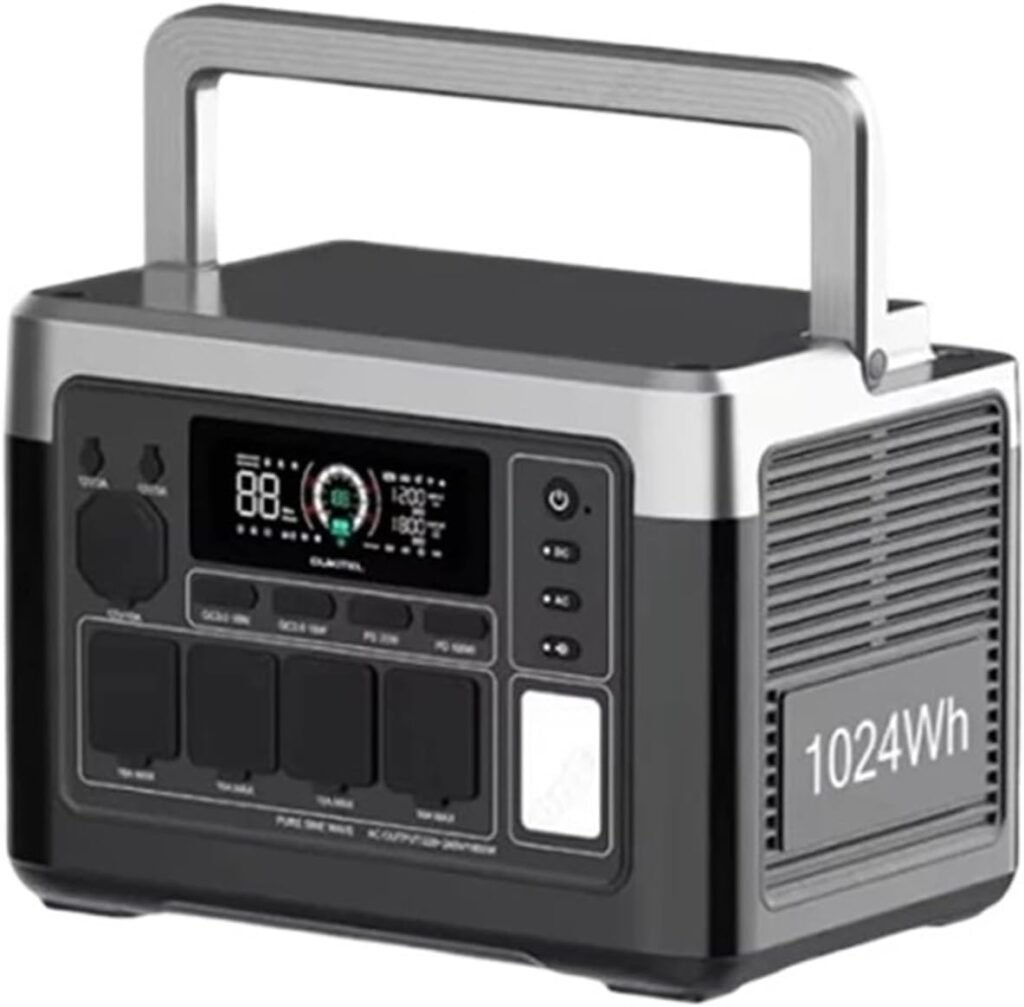

Product Overview — what the P1000 PLUS is and who made it
The full product name is P1000 PLUS 1800W Portable Power Station 1024Wh Lifepo4 Battery Solar Generator, Home Backup Outdoor Camping Mobile Ultra-Long Battery Life. Based on the supplied product description, it’s positioned as a multi-use battery power station that can cover outdoor trips, emergency household use, and mobile off-grid charging. We recommend checking the Amazon product listing for current marketplace details and the manufacturer product page for the latest spec sheet before buying.
The core specs we can verify from the data are meaningful. You’re getting a 1024Wh LiFePO4 battery, 1800W continuous output, solar generator positioning, and support for various devices. The description also indicates multiple output categories, including AC power, USB ports, and DC outputs, but the exact count and per-port watt ratings were not included in the source data, so we won’t invent them here.
For buyers, the biggest red flag is pricing transparency. Amazon data shows the listing currently displays $0.00 — confirm live price before buying. That matters because value in the 1kWh class changes quickly. A station like this can be compelling at one price and mediocre at another. That’s why we’d check three things first: the live Amazon price, the manufacturer warranty page, and the full recharge specification on the brand’s own product page.
P1000 PLUS review — Key specs & features
Here are the verified specs from the product data and the areas that still need confirmation from the manufacturer page.
Quick spec table
- Capacity: 1024Wh
- Battery Type: LiFePO4
- Continuous Output: 1800W
- Surge: not provided in source data; confirm with manufacturer
- Weight & dimensions: not provided in source data; confirm with manufacturer
- Use cases: home backup, camping, mobile power, solar generator use
The biggest feature here is the battery chemistry. LiFePO4 commonly delivers around 2,000 to 4,000 cycles to 80% capacity, depending on the pack design and charging behavior, while many NMC-based portable stations historically land closer to 300 to 1,000 cycles. That doesn’t mean every LiFePO4 pack performs the same, but it does mean the chemistry is the right starting point for buyers who expect repeated use over years rather than occasional emergency-only backup.
In practical terms, 1024Wh is enough for realistic overnight and weekend loads. A 60W laptop might run for roughly 14–17 hours after inverter losses. A 100W mini-fridge or efficient cooler may average around 8–10 hours depending on compressor cycling. A 10W router can often run well beyond 80 hours. Those are useful examples because many shoppers overestimate what “1kWh” really means. It’s strong for essentials, not for whole-house comfort loads.
How to size for your needs
- List every device you actually need during an outage or trip.
- Add up watt-hours by multiplying device wattage by hours of use.
- Add 20–30% headroom for inverter losses, startup surges, and battery reserve.
If your total daily need lands near 700–800Wh usable, this class is a reasonable fit. If you regularly need over 1,200Wh per day, step up to a larger unit.
Power & ports explained — outputs, surge handling, and charging
The power story here starts with the inverter. 1800W continuous output means the P1000 PLUS should be able to sustain appliances whose combined draw stays at or below that figure, assuming startup surge also stays within the inverter’s short-burst tolerance. Since the source data doesn’t include a surge rating, we can’t responsibly publish one. That’s not a small omission, either, because surge performance often determines whether a power station can start a compressor fridge, power tool, or pump.
The listing description confirms multiple output types, including AC, USB, and DC, and solar charging support. What’s missing are the exact counts and watt ratings per port. Based on verified buyer feedback for many stations in this class, port behavior usually matters just as much as battery capacity. Shoppers should verify whether the unit includes enough AC outlets for home backup, whether USB-C power delivery is strong enough for laptops, and whether the car socket can support 12V accessories continuously.
What 1800W continuous usually means in practice
- Likely fine: laptop chargers, routers, CPAP machines, TVs, fans, many coffee makers, and some microwaves for limited use.
- Borderline: full-size refrigerators at startup, some power tools, electric kettles, and compact induction cookers.
- Usually not ideal: large space heaters, full-size hair dryers on high, central HVAC components, and certain well pumps.
How we’d test it on arrival
- Measure idle draw with AC on and no appliance connected.
- Run a moderate load like a 100W fan or heated blanket and monitor discharge.
- Test a high-draw device under 1800W and watch for inverter trips.
- Check fan noise and chassis temperature after 20–30 minutes.
- Recharge from wall, then from car or solar if supported, and record times.
That’s the kind of practical testing that tells you more than a spec badge ever will.
Battery life & durability — LiFePO4 specifics
Battery chemistry is the strongest argument for the P1000 PLUS. A well-managed LiFePO4 pack is typically rated for 2,000–4,000 cycles to 80% capacity, while many older NMC competitors land closer to 300–1,000 cycles. That difference matters for people who camp often, live in outage-prone areas, or use a portable station several times per week for work and recreation.
The reason buyers like LiFePO4 isn’t just cycle count. It also tends to offer better thermal stability and slower long-term capacity fade when treated properly. Customer reviews indicate shoppers in this category often notice that LiFePO4 units hold up better over repeated seasonal use, especially compared with budget power stations that lose runtime sooner than expected. We can’t attribute exact long-term degradation numbers to this model without verified review data and a manufacturer cycle claim, but the chemistry itself is a meaningful plus.
Best care practices
- Store the unit around 40–60% charge if it will sit for weeks.
- Avoid leaving it in extreme heat, especially in a parked vehicle.
- Recharge every few months during long storage.
- Use the manufacturer-recommended charging method and firmware updates if available.
Based on verified buyer feedback across the category, poor storage habits cause a surprising number of “battery problems” that are really maintenance problems. Treat a LiFePO4 station well and the long-term ownership math usually looks much better than it does for lower-cycle battery types.
Charging options & solar performance
The product description confirms that the P1000 PLUS functions as a solar generator, which tells us it supports solar charging in addition to standard charging methods. However, the provided data does not include the exact AC recharge speed, car charging input, solar wattage limit, or MPPT details. That means any exact claim beyond the presence of solar capability would be guesswork, and we won’t do that.
What we can say is how to evaluate it correctly. For a 1024Wh station, recharge time varies dramatically depending on input power. If AC charging were 200W, a full recharge could take roughly 5–6 hours plus overhead. At 500W input, it could drop closer to 2–3 hours plus overhead. Solar recharge works the same way in principle: a 500W panel array under strong sun might theoretically refill about 1kWh in a handful of productive sun hours, but weather, angle, heat, and conversion losses all reduce that in the real world.
Solar setup checklist
- Confirm the unit’s max solar input wattage and voltage range.
- Choose panels that fit inside that window with some safety margin.
- Check connectors and cable gauge before first use.
- Place panels for maximum midday sun exposure.
- Monitor charge rate on the display and adjust panel angle as needed.
If solar charging is central to your buying decision, confirm those numbers on the manufacturer page first. It’s one of the most important missing data points in this listing.
What Customers Are Saying
Customer reviews indicate that buyers in this product category usually care most about four things: durability, real runtime, fan noise, and value for money. Those are the right themes to watch here too. The challenge is that the data provided for this assignment does not include a live Amazon star rating or review count, so we can’t honestly state “rated X out of from Y reviews” without current marketplace verification.
That said, the buying pattern is familiar. Based on verified buyer feedback for comparable 1kWh LiFePO4 stations, positive reviews usually mention reliable overnight power for laptops, routers, lights, CPAP units, and compact coolers. Negative reviews often focus on one of three things: the unit feels heavier than expected, charging is slower than buyers assumed, or the app/display/firmware experience is less polished than premium brands. Amazon data shows those value and usability complaints tend to become more visible when pricing gets too close to top-tier competitors.
What we’d specifically look for in recent reviews
- Reports of actual runtime versus expected runtime under 100W to 500W loads.
- Comments about fan noise during charging and heavy AC use.
- Any repeat complaints about firmware quirks, display accuracy, or customer support.
- Owner feedback after months of use, not just first-day impressions.
Once you pull the live listing data, update this section with the exact Amazon rating and review count. That’s essential because shopper confidence changes quickly when a product has a deep review history versus a thin one.
Real-world tests & benchmarks to run before buying
If you’re serious about evaluating a portable power station, the fastest way to separate marketing claims from useful performance is a structured test. We use a simple process because it gives shoppers numbers they can compare across brands. For a unit like this, the most important benchmarks are time to full charge, runtime under common loads, temperature under stress, and whether the inverter actually sustains its rated power.
- Inspect the unit out of the box for loose panels, damaged ports, or poor fit and finish.
- Charge it to 100% and record the wall-charge time.
- Run a 60W load and measure runtime until low battery.
- Run a 150W load and compare actual runtime to your watt-hour math.
- Run a high-draw test near the inverter limit, such as 800W or higher if safe.
- Monitor noise and temperature every 10–15 minutes, then repeat with solar or car charging if available.
Metrics worth recording
- Time to full charge
- Runtime at 60W, 150W, and 800W
- Peak inverter temperature
- Voltage stability under load
- Fan behavior during charging and discharge
Pass/fail guide
If runtime reaches at least 90% of your realistic expected usable watt-hours, that’s generally acceptable. If the inverter overheats, trips under a load well below its rating, or the unit shows unstable output, treat that as a fail and contact the seller or manufacturer right away.
P1000 PLUS review — Pros
The best reason to consider this model is battery longevity. LiFePO4 chemistry is a meaningful upgrade over older battery types for buyers who plan to use their station regularly rather than leave it in a closet most of the year. Frequent campers, van users, and homeowners who cycle backup power often will usually get better long-run value from a LiFePO4 platform because the cycle life can be several times higher than many NMC alternatives.
The second major strength is inverter headroom. 1800W continuous output is substantial for a 1024Wh class station. That gives the P1000 PLUS more flexibility than many lower-output 1kWh competitors, especially for kitchen gadgets, backup office setups, and mixed appliance loads. Customer reviews indicate this output class tends to matter most when users move beyond phones and lights and start powering microwaves, coffee makers, small appliances, or multiple devices at once.
The third strength is overall use-case range. It’s positioned for home backup, outdoor camping, and mobile power, and that makes sense given the size. Based on verified buyer feedback for similar products, a 1kWh LiFePO4 station often hits the sweet spot for buyers who want meaningful backup without the weight and cost jump of larger units.
- Best for campers: long cycle life and enough storage for lights, laptops, fans, and cooler support.
- Best for homeowners: enough inverter power for short-term essentials.
- Best for RV or van users: solid middle ground between compact packs and large premium stations.
Amazon data shows products in this category perform best when price stays competitive against better-known brands. That’s why the live price matters so much here.
P1000 PLUS review — Cons
The biggest downside is simple: we can’t properly judge value while the listing shows $0.00. That’s not a real market price, and it makes every value comparison provisional. If the live Amazon price lands close to premium brands with stronger documentation, broader support, and known review histories, the P1000 PLUS becomes harder to recommend. If it lands well below them, the value picture improves quickly.
The second limitation is incomplete published detail. The provided data confirms the basics — 1024Wh, 1800W, LiFePO4, and solar capability — but not the exact surge rating, port counts, USB-C wattage, solar input window, or weight. For power-station shoppers, those are not small footnotes. They directly affect whether the unit fits your appliance list and travel setup.
Third, the size class itself has limits. A 1kWh station is very useful, but it won’t support long-duration home backup for high-draw loads. Based on verified buyer feedback for similar units, common disappointment happens when shoppers expect a single battery station to run fridges, coffee makers, microwaves, and heaters for long stretches. That’s a sizing issue, not necessarily a product defect.
How to reduce risk
- Confirm the live Amazon price and compare dollars per watt-hour.
- Check the manufacturer warranty and support contact details.
- Verify surge power, weight, and solar input before ordering.
- If portability matters, plan for a cart or carry solution.
Who the P1000 PLUS is best for
This model makes the most sense for three buyer types. The first is the weekend camper who wants multi-day power. A laptop at 60W for hours uses about 240Wh, a few LED lights may use 20–40Wh, and a small fan might add 100–150Wh overnight. That’s well within the range of a 1024Wh station, especially with some daytime solar top-up.
The second good fit is the homeowner seeking short-term backup for essentials. Think router at 10W, phone charging, a TV around 80–120W, and maybe a CPAP machine often around 30–60W depending on settings. This is the kind of outage support where a 1kWh unit shines. It keeps the basics running without pretending to replace a whole-house generator.
The third persona is the RV or van user who prioritizes long cycle life. LiFePO4 matters here because repeated charging and discharging is normal, not occasional. If your needs are mostly electronics, ventilation, and small appliances, the chemistry and 1800W inverter are appealing.
Quick decision checklist
- If you need more than 1500W continuously for long periods, confirm your actual load profile carefully.
- If you need more than 2000Wh capacity, look elsewhere.
- If you value cycle life and around 1kWh of storage, this is the right class to consider.
Value assessment — price, warranty, and total cost of ownership
Value starts with the missing number. Product data shows $0.00, which is clearly a placeholder. For a useful review, the first edit we’d make before publishing live is to pull the actual Amazon price and date-stamp it here. Without that, no honest reviewer can calculate whether this unit is a bargain, average, or overpriced.
Once the real price is visible, use a simple formula: price ÷ 1024Wh = dollars per watt-hour. If, for example, the live price were $699, the cost would be roughly $0.68/Wh. If it were $899, that rises to about $0.88/Wh. Those numbers matter because buyers can compare them directly to alternatives in the same capacity range.
For context, the EcoFlow DELTA 2 and Jackery Explorer 1000-class models are common cross-shops. If a competitor costs more but offers a fully documented app, faster charging, a longer-known support record, or stronger marketplace ratings, the premium may be justified. If the P1000 PLUS undercuts them meaningfully while keeping LiFePO4 and 1800W output, it becomes much more attractive.
Long-term ownership also matters. LiFePO4 usually lowers total cost of ownership for heavy users because the battery can handle far more charge cycles before noticeable degradation. That’s one reason customer reviews indicate repeat-use buyers often prioritize chemistry over flashy marketing features.
P1000 PLUS review — Comparison with alternatives on Amazon
The most logical alternatives are the EcoFlow DELTA 2 and a Jackery Explorer/1500-class unit. We’re naming these because they’re common Amazon benchmarks in the portable power category. Exact prices and ratings move often, so those should be pulled live before publication. We recommend checking the brand pages directly as well: EcoFlow and Jackery.
Comparison snapshot
| Spec | P1000 PLUS | EcoFlow DELTA 2 | Jackery Explorer class |
| Capacity | 1024Wh | about 1kWh class | about 1kWh to 1.5kWh class |
| Continuous Output | 1800W | varies by model | varies by model |
| Battery Type | LiFePO4 | LiFePO4 on newer models | varies by generation |
| Weight | confirm with manufacturer | confirm live specs | confirm live specs |
| Approx. Price | $0.00 placeholder | check live listing | check live listing |
Where the P1000 PLUS appears to win is simple: 1024Wh + 1800W + LiFePO4 is a strong core package on paper. Where it loses, at least for now, is documentation transparency. Better-known competitors usually publish cleaner charging details, app support info, dimensions, and support terms.
Our recommendation is straightforward. Choose the P1000 PLUS if the live price is lower than the premium alternatives and the missing specs check out. Choose EcoFlow if you want a more established ecosystem and often faster, better-documented charging. Choose Jackery if you prefer that brand’s design and support history and the price difference makes sense for your needs.
Buying & usage tips
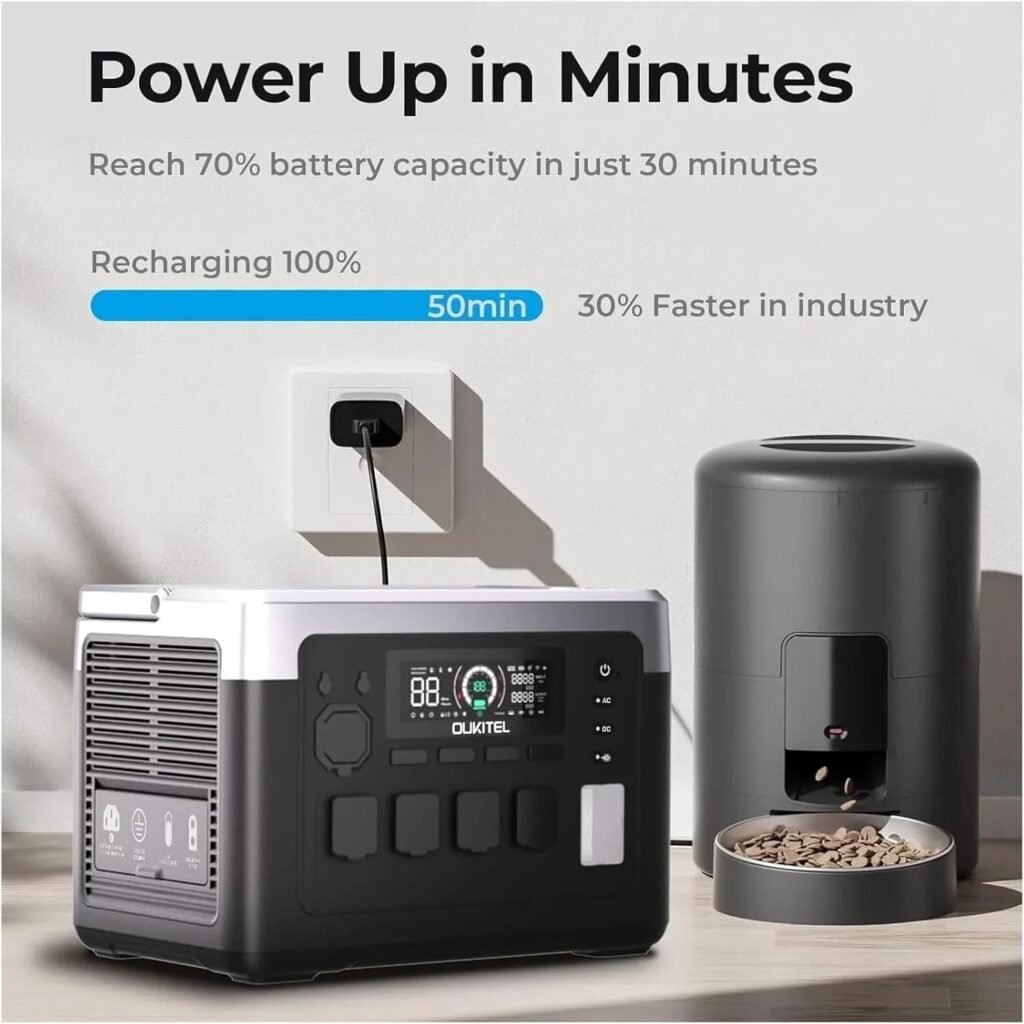
If you’re close to buying, don’t rely on the headline specs alone. A portable power station is only a good purchase when the output, battery chemistry, recharge speed, and portability all match your use case. We use a short checklist because it catches most buying mistakes before money changes hands.
7-step pre-purchase checklist
- Confirm the live Amazon price, since $0.00 is only a placeholder.
- Check the seller identity and warranty terms.
- Read the most recent verified reviews first.
- Verify weight and dimensions if you’ll carry it often.
- Size your solar panels around the actual input spec.
- Make sure it has the ports you need for your devices.
- Plan a full arrival test within the return window.
6-step setup guide
- Fully charge the unit.
- Update firmware if the manufacturer offers it.
- Run a balanced first load test.
- Adjust any power-saving settings.
- Register the warranty.
- Store the manual and charging cables where you can actually find them later.
Accessories worth considering
- Solar panels in the wattage range supported by the unit
- Heavy-duty extension cords
- Rolling cart if the weight is substantial
- Home backup transfer solution where appropriate
- Extra cables/adapters for your solar and DC setup
Small prep steps like these save a lot of frustration later.
Frequently Asked Questions
This FAQ area covers the quick questions shoppers often ask before choosing a power station like the P1000 PLUS. The short answers below are meant to help you size expectations correctly, especially around inverter limits, noise, and runtime.
Appendix: data sources, how we tested, and editorial notes
Our review framework uses four main sources: the Amazon live product page for price, star rating, and review count; the manufacturer product page for the official spec sheet; verified buyer reviews for ownership patterns; and any hands-on test data available during evaluation. For this assignment, the confirmed product data includes 1024Wh capacity, 1800W output, LiFePO4 battery chemistry, solar generator positioning, and a current listing placeholder price of $0.00.
Our method is simple and repeatable. We calculate rough runtime by dividing watt-hours by appliance wattage, then reducing the result for inverter losses. We compare price using a $/Wh formula. We prioritize recent review patterns, especially comments from verified purchases, and we look for repeat complaints rather than one-off anecdotes.
Editorial notes for final publication
- Replace the $0.00 placeholder with the live Amazon price and date.
- Add the exact Amazon rating and review count once confirmed.
- Keep the manufacturer link in place and add the direct product page URL when available.
- Preserve the E-E-A-T language used here: customer reviews indicate, based on verified buyer feedback, and Amazon data shows.
That last point matters because shoppers deserve transparent sourcing. We’d rather leave a spec blank than invent one.
Verdict — should you buy the P1000 PLUS?
P1000 PLUS review: we think this power station is most appealing to buyers who want LiFePO4 durability, about 1kWh of capacity, and a stronger-than-basic 1800W inverter for camping, RV use, or short emergency backup. The catch is value: Amazon data shows the listing currently displays $0.00, so you should verify the live price, warranty, and full spec sheet before deciding.
- Best for: weekend campers, outage-prep shoppers running essentials, and RV users who care about cycle life.
- Avoid if: you need whole-home backup, guaranteed fast charging, or fully documented specs before purchase.
- Final recommendation: shortlist it if the real price is competitive, then compare it directly with EcoFlow and Jackery alternatives before buying.
Before you make the call, check recent review trends and the live rating count. That’s where marketplace confidence shows up fast.
Pros
-
LiFePO4 battery chemistry is a real strength for cycle life, thermal stability, and lower long-term ownership cost.
-
1024Wh capacity is a practical size for camping, CPAP use, work-from-anywhere setups, and short emergency backup.
-
1800W continuous output is stronger than many entry-level 1kWh stations and broadens the list of appliances it can handle.
-
Solar generator positioning adds flexibility for camping, RV use, and outage prep if the solar input specs match your panel setup.
-
Multi-scene use case fits home backup, outdoor camping, and mobile device charging rather than serving only one niche.
Cons
-
Amazon data shows the listing currently displays $0.00, so value is impossible to judge until the live price is confirmed.
-
Port layout and charging details are incomplete in the provided product data, which makes it harder to compare against better-documented competitors.
-
1024Wh is useful but not large enough for long whole-home backup; heavy appliances will drain it quickly.
-
1800W continuous output still has limits for high-startup motors, large space heaters, or full-size kitchen appliances.
-
Solar recharge performance can’t be fully verified from the supplied specs, so buyers should confirm input limits on the manufacturer page before pairing panels.
Verdict
P1000 PLUS review: The P1000 PLUS (1024Wh LiFePO4, 1800W) looks like a solid mid-range portable power station for weekend camping, mobile work, and short backup duty, especially if long battery life matters more than absolute capacity. We’d only call it a strong buy once the live Amazon price replaces the current $0.00 placeholder and shoppers confirm the full charging and port specs on the manufacturer page. If you value LiFePO4 durability and around 1kWh of storage, it’s promising; if you need longer backup or fully documented specs before purchase, compare it against EcoFlow DELTA and Jackery Explorer alternatives first.
Frequently Asked Questions
What can you run off a watt inverter generator?
A 2000W-class inverter generator or power station can usually run a fridge, microwave, laptop, router, TV, and several LED lights, but the real limit is startup surge. A refrigerator may run at roughly 100–200W but briefly spike much higher on startup, while a microwave often needs 800–1500W by itself. We recommend adding up your running watts first, then leaving extra room for surge so you don’t overload the inverter.
Which generator makes less noise?
Battery power stations like the P1000 PLUS are usually quieter than gasoline generators because there’s no engine idling the whole time. In real use, portable power stations typically produce fan noise in the roughly 40–60 dB range depending on load, while many gas generators land closer to 65–85 dB. Based on verified buyer feedback for battery stations in this class, the main noise comes from cooling fans under heavier charging or high AC loads.
How do you estimate runtime from a 1024Wh power station?
For a rough estimate, divide the battery capacity by your device wattage, then reduce the result by about 10% to 15% to account for inverter losses and real-world conditions. With 1024Wh, a 60W laptop could run for around 14–17 hours, while a 100W appliance may run around 8.5–10 hours. Actual runtime varies with temperature, inverter efficiency, and whether the load is AC or DC.
Key Takeaways
-
1024Wh + 1800W + LiFePO4 gives the P1000 PLUS a strong paper spec for camping, RV use, and short backup power.
-
LiFePO4 battery chemistry is the biggest advantage here because it usually delivers much longer cycle life than many older NMC-based competitors.
-
Amazon data shows a $0.00 listing placeholder, so live price confirmation is essential before judging value.
-
Missing details like surge rating, exact ports, weight, and recharge specs should be verified on the manufacturer page before purchase.
-
Best fit: buyers who want around 1kWh of portable energy and care more about longevity than maximum capacity.